๐Ÿšจ Emergency Mold Removal โ€” Serving Arvada & the Northwest Metro (720) 794-0650

โ€” Arvada, Colorado ยท Buying & Selling

Mold Found in a Home Inspection: What Arvada Buyers Do Next

Few lines in an inspection report spike a buyer's heart rate like the word "mold" โ€” and few are as solvable. We walk Arvada buyers through the calm sequence: find the source before fearing the species, negotiate with a scope in hand, and close with clearance paper that settles it for good.

Mid-transaction and the clock is ticking? Call and tell us where you are in the process โ€” deals have deadlines, and we work to them.

  • Written Scope for the Negotiation
  • Third-Party Lab Clearance
  • Moisture Source Found First
  • Free, No-Obligation Quotes
  • Local Arvada Team
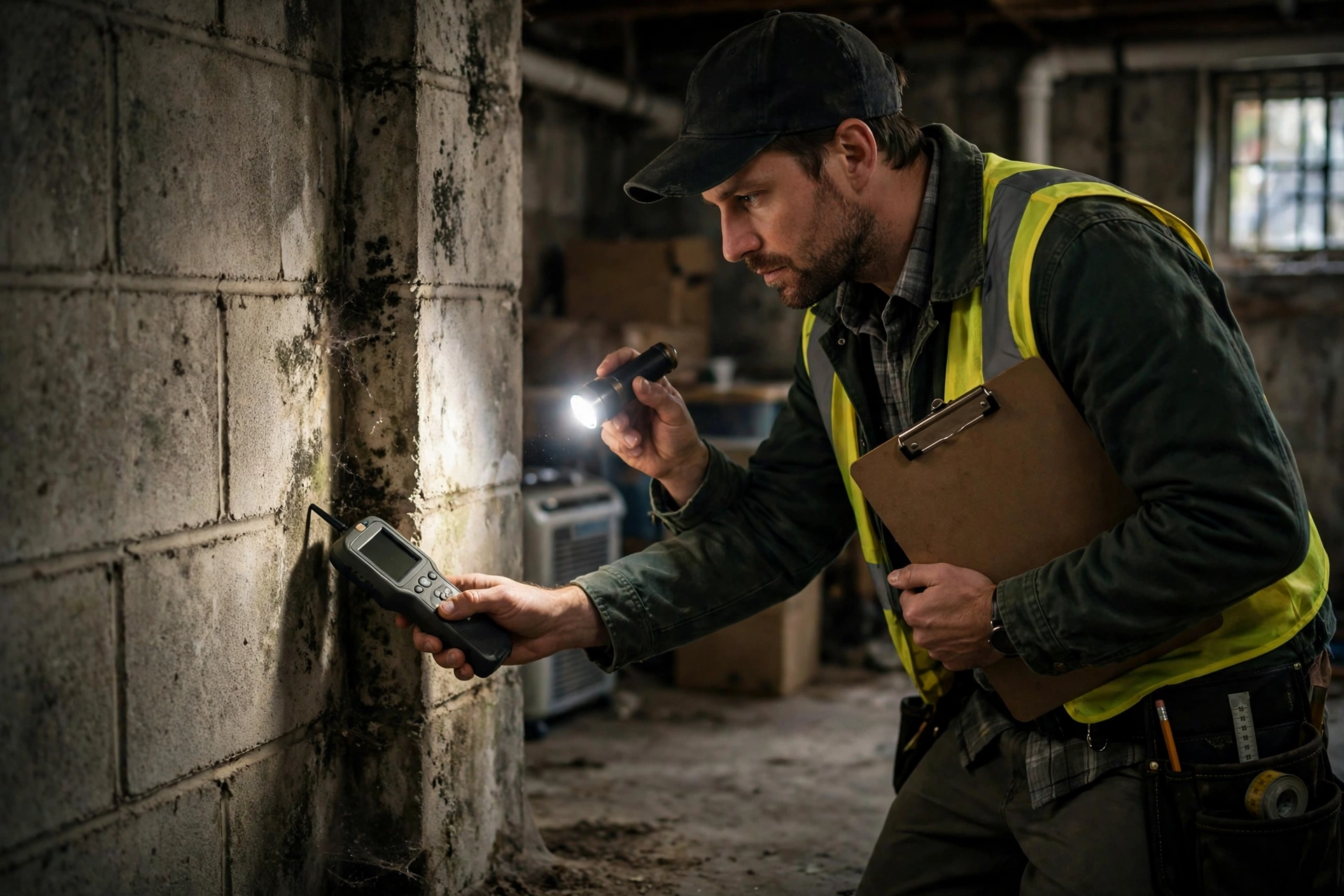
Inspector running a moisture meter along a basement wall during a home inspection in Arvada

01 The Panic Point

Why Does the Word "Mold" Stall a Closing?

Of all the findings that surface in a home inspection, mold is the one that reliably stops a deal in its tracks โ€” not because it is the most expensive, but because it arrives as a word instead of a number. A worn roof comes with an age and a price range. A furnace comes with a date. "Mold observed in basement" comes with nothing: no size, no source, no cost โ€” and a buyer's imagination happily fills in all three, at the worst settings, inside an inspection window that is already ticking.

We get these calls mid-transaction, from buyers, sellers, and agents all over the northwest metro, and the situation is almost never what the panic suggests. In Arvada's housing stock, an inspection mold finding is usually a water-management problem that has been quietly running for a season or two โ€” a dead sump pump, seepage through the cove joint, a bath fan venting into the attic. Water problems have known fixes and knowable prices. The work of the next few days is converting the scary word into those two things: a source and a scope.

02 Step One

What Should a Buyer Do First? Find the Source, Not Just the Species

The instinct is to order a lab test immediately and find out what kind of mold it is. Resist it โ€” or at least, do not stop there. A lab result tells you what is growing; it says nothing about why, how far it has spread, or what it will cost to end. A species name without a moisture source is half a diagnosis, and you cannot negotiate with half a diagnosis.

The species buyers ask about by name is almost always black mold โ€” and if the lab names it, black mold removal in Arvada starts with containment and a written scope, not panic.

The first move is a moisture-first look at the home: meters on the basement walls, the sump pit checked, the foundation's cove joint read for seepage staining, the attic checked for a bath fan venting where it shouldn't. That visit answers the questions the deal actually turns on โ€” where is the water coming from, how much material is affected, and is the fix a pump, a grading correction, or a plumbing repair wearing a mold costume?

Testing has its place in a transaction โ€” documented findings carry weight at the negotiating table, and clearance results close the loop at the end. When samples are warranted, independent lab testing, read by a third party, is the version that holds up, because nobody at the table can accuse the lab of selling the cure. Sequence matters: source and extent first, species second, and the species question often answers itself once the water story is clear.
03 The Negotiation

Who Pays? It's a Negotiation, Not a Rule

Buyers ask us who is "supposed" to pay, as if a statute somewhere assigns it. There isn't one. In practice, inspection mold gets settled one of three ways โ€” and all three work when the scope is written down:

A Credit at Closing

The seller credits the buyer an agreed amount against the documented scope, and the buyer handles the work after moving in, on their own schedule and with their own contractor. Clean, fast, and the most common outcome when the job is small and the closing date is close.

Seller Remediates, With Paper

The seller has the work done before closing โ€” and the deal specifies the deliverables: the written scope, the moisture-source fix, and third-party clearance results handed over at or before closing. Done this way, the finding becomes a selling point: a documented, lab-verified fix.

A Price Adjustment

The price moves to reflect the documented cost, and the buyer takes the home as-is with the scope in hand. This suits larger jobs where rushing remediation into a closing window would cut corners โ€” the work gets done properly, after the sale, at the agreed economics.

What All Three Need

A number both sides trust. That means an itemized written scope โ€” what comes out, what gets treated, what the water fix is, what clearance will prove โ€” produced before the negotiating starts, not estimated over the phone from a photo of a stain.

04 The Paper That Settles It

What Paperwork Makes a Mold Finding Resolvable?

A mold finding stops being scary the moment it is fully documented, because documents can be priced, negotiated, verified, and filed. The file that resolves a transaction has three parts. First, the written scope: what was found, what will be removed and treated, and what the moisture fix is โ€” itemized, so either side's agent can read it without a translator. Second, the work record: what was actually done, matching the scope. Third โ€” the piece that turns "we cleaned it" into proof โ€” third-party clearance testing after remediation, read by a lab with no stake in the job, confirming the space is back to normal background levels.

Colorado is making this paper trail the norm rather than the exception. The state's seller disclosure, Form SPD19 โ€” mandatory in its refreshed form from January 1, 2026 โ€” asks sellers directly about moisture and seepage in the basement or crawlspace and about mold investigation reports. Sellers increasingly arrive at a listing with moisture history already documented, and buyers increasingly expect it. A finding handled with scope and clearance paper fits straight into that system; a finding handled with a shrug and a bleach wipe does not.

If you are deciding whether testing belongs in your transaction at all โ€” before the work, after it, or both โ€” our companion guide on when mold testing earns its cost walks through exactly that judgment, including why end-of-job clearance is the test we recommend most.

05 Local Context

Why Is This So Common in Arvada's Housing Stock?

Step back from the single house and the finding stops looking like bad luck. Arvada's median home was built in 1979, and 52.5 percent of the housing stock predates 1980 โ€” postwar ranches in the southeast, 1970s split-levels around Lake Arbor and Club Crest, crawl-space homes in Alta Vista and Lamplighter. These are houses whose basements have now weathered forty-plus springs of snowmelt pressing against the foundation, on clay soil that swells as it wets and cracks the cove joint where wall meets floor.

That is why basement moisture findings are simply common in this stock โ€” closer to a known maintenance chapter than a catastrophe. The sump pump is a consumable with a lifespan, the grading settles toward the house over decades, and a finished basement hides the early staining behind drywall until an inspector's moisture meter finds it. None of that makes a finding nothing; it makes it ordinary, diagnosable, and fixable โ€” usually a water-management problem with a known fix, priced in the same published ranges as any other Arvada job.

So if the report just landed in your inbox: breathe, get the source found, get the scope written, and let the negotiation do what negotiations do. And if you want that scope from a local crew that will put it in writing โ€” call us at (720) 794-0650. We will tell you what we find, what it costs, and what paper you will hold when it is done.

06 Get Started

Request Inspection Online

Tell us what you are seeing โ€” the smell, the stain, the flooded corner. We will call back with next steps.

Prefer to talk? Call (720) 794-0650.

07 FAQ

Inspection Questions, Answered Straight

The questions buyers and sellers ask us in the middle of a transaction โ€” answered calmly, and in order.

Rarely, when it is handled in the open. What kills deals is an unanswered question โ€” a scary word with no scope, no price, and no plan. A documented finding with a written remediation scope and a price attached becomes a negotiation item like a worn roof or an old furnace: something to price, credit, or fix, not a mystery to flee.

Whoever the negotiation says โ€” there is no rule. The common outcomes are a seller credit at closing, the seller completing remediation before closing with the paperwork handed over, or a price adjustment that lets the buyer handle it after moving in. What makes any of them work is the same: a written scope both sides can point at, and third-party clearance testing when the work is done.

Three things: the written, itemized scope showing what was removed and treated; the moisture-source fix, documented โ€” a sump pump replaced, grading corrected, a leak repaired; and the third-party clearance results, read by a lab that did not do the work. In Colorado, that paper also answers the seller's disclosure questions honestly, because Form SPD19 asks about moisture and mold reports directly.

Ready to Deal With Your Mold Problem?

The smell, the stain, the flooded corner โ€” whatever brought you here, the next step is a look, a moisture reading, and a written scope you can hold us to.

Free, no-obligation quotes ยท Written scope before work starts ยท Third-party lab clearance