🚨 Emergency Mold Removal — Serving Arvada & the Northwest Metro (720) 794-0650

— Arvada, Colorado · Emergency Mold Service

Emergency Mold Removal in Arvada, CO

A burst pipe or a dead sump pump does not wait for business hours — and neither does mold. Growth can begin inside wet drywall within 24 to 48 hours of a water event, so the first day decides whether you pay for drying or for demolition. Emergency Mold Removal Arvada is built for that window: call us, and we talk you through the first steps on the phone, then get the area contained, dried, and into a written scope you can hold us to.

The phone is answered, and wet, actively growing jobs get scheduling priority. Prefer writing? Request an inspection online and we will come to you.

  • ANSI/IICRC S520 Process
  • Third-Party Lab Results
  • Written Scope Before Work Starts
  • Free, No-Obligation Quotes
  • Local Arvada Team
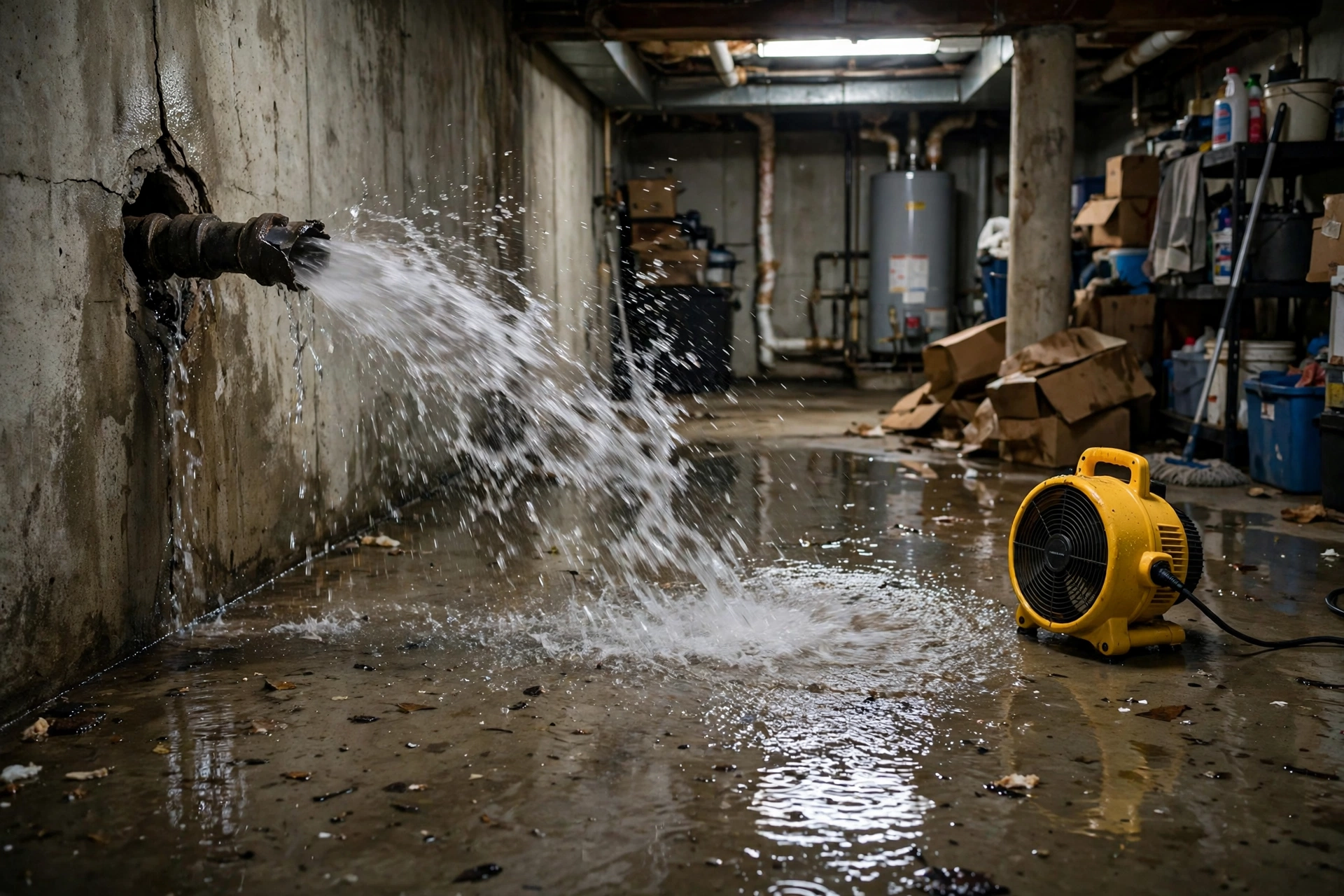
Burst pipe spraying water across a basement floor in Arvada, Colorado

01 The First Hours

Water in the House? Do These Five Things First

Before any crew arrives — ours or anyone's — the first hours belong to you, and they matter more than any drive time. Emergency Mold Removal Arvada starts with what happens in your home in hour one. Here is the order we give every caller:

HOUR 0 HOUR 24 HOUR 48 DAY 3+ WATER EVENT A pipe bursts, a sump fails, meltwater gets in FIRST 24 HOURS The drying window — what you do now decides it 24–48 HOURS Mold can begin growing inside wet walls AFTER 48 HOURS Wet material colonizes — the removal scope grows
The 24–48 hour clock: why the first day decides whether this stays a water problem or becomes a mold problem.
  1. Stop the water

    If you can do it safely, shut the water off at the main — usually in the basement or crawl space near the front wall — or at the fixture. If water is near outlets, the panel, or plugged-in appliances, skip this step and tell us. Electricity changes the order.

  2. Keep everyone out

    Close the door on the wet area and keep kids and pets out until it is assessed. Wet drywall and carpet can already be growing things you do not want tracked through the house.

  3. Photograph everything

    Before you move, mop, or tear out anything, take photos and video of every wet room, wall, and belonging. Insurers pay sudden water events far more readily with documentation than with a dried-out room and a story.

  4. Do not blow air across it

    It feels productive, but a household fan aimed at wet, growing drywall mostly spreads spores into clean rooms. Drying is real work — it just has to be contained drying, which is our side of the job.

  5. Call us

    Call (720) 794-0650. We will walk you through anything above you are unsure about, then come out, contain the area, and start drying — with the scope written down before removal work begins.

02 Why It Hurts

An Emergency Is Two Problems at Once

There is the water problem — loud, visible, right now. Riding along with it is a fear problem: that the damage is worse than it looks, and the bill worse than the damage. We built this service around all of it.

The clock you cannot see

Drywall wicks water upward behind the paint, and insulation holds it like a sponge. A basement that looks mostly dry on day two can be growing mold inside the wall cavity — and every extra day is more material that has to come out instead of dry in place.

The money fear

Emergencies are where homeowners get overcharged: water on the floor, a stranger at the door, a big number with no line items. Our answer is boring on purpose — containment and drying first, then a written, itemized scope before removal work starts, rebuild priced separately.

The house still has to work

Kids, pets, a tenant downstairs, a closing next week — a flood does not pause your life. Containment seals the work area off, so the dry part of the home stays livable while the wet part gets handled.

Handled in that order — clock first, paperwork always — an emergency stays a water story instead of becoming a mold story. That is what Emergency Mold Removal Arvada means: the urgency treated seriously, and the invoice just as seriously.

03 Is This an Emergency?

What Counts as a Mold Emergency?

Not every wet spot is an emergency — a slow drip under a sink, caught the same day, is a repair. The situations below are different: lots of water, in finished materials, clock already running.

Burst or frozen pipe

A split line can put hundreds of gallons into walls and floors before anyone notices. If drywall, insulation, or carpet got soaked, treat it as an emergency until it is dried and checked — the puddle is the small part.

Sump failure during snowmelt

Arvada's classic. The pump quits during melt week, the pit overflows quietly, and the finished basement takes on water for days. By the time the musty smell arrives, growth usually has a head start.

Water heater or appliance flood

A failed water heater, a split washer hose, a dishwasher line letting go — clean water, but a lot of it, across finished floors. How fast it dries decides whether flooring, baseboards, and wall bottoms survive or come out.

Sewage backup — a caution

Sewage is not a mold job first; it is a biohazard situation. Keep everyone out of the area, do not try to clean it yourself, and call us — we will tell you honestly what it needs and get the right precautions in place first.

04 Who Calls

Who Calls Us Mid-Emergency?

Most calls for Emergency Mold Removal Arvada come from one of three situations — and each one has a second clock running underneath the water:

Homeowners mid-flood

You found water where water should never be — a Lake Arbor basement after a hard chinook thaw, an Olde Town laundry room with the washer hose split. You need the water stopped, the area made safe, and a straight answer about what can be saved.

Landlords with tenants in place

Under Colorado's SB 24-094, once a tenant notifies you in writing about mold tied to dampness, you have 72 hours to begin containment, stop the water source, and run HEPA filtration — documented. An emergency call is how that clock gets met, not missed.

Sellers mid-transaction

Water damage a week before closing can sink a deal — and Colorado's seller disclosure, Form SPD19, asks directly about moisture and mold. Fast, documented work — written scope, dated photos, lab results at the end — gives a nervous buyer a reason to stay at the table.

05 Why Here

Arvada's Emergencies Have a Pattern

Our water does not arrive gently. Winter chinooks swing the temperature hard enough to freeze a pipe one night and thaw it the next — and a frozen pipe usually announces itself at the thaw, as a flood. Spring is the second season: snowmelt pressing against foundations set in bentonite clay, sump pumps running near-continuous duty until one burns out at 2 a.m.

And the city has seen the large version. In September 2013, Leyden Creek overflowed across Arvada and Ralston Creek breached the Croke Canal — the same below-grade pathways that flood one basement at a time, at city scale. Most emergencies are smaller, but the water's route is identical: in at the foundation, up into the walls, into the finished rooms people live in.

That pattern is why Emergency Mold Removal Arvada starts below grade on every call — sump pit, cove joint, the base plates behind finished walls — before anyone talks about the stain upstairs.
06 Get Started

Request Inspection Online

Tell us what you are seeing — the smell, the stain, the flooded corner. We will call back with next steps.

Prefer to talk? Call (720) 794-0650.

07 FAQ

Emergency Questions, Answered Straight

Stop the water at the main shutoff if you can do it safely, and keep people and pets out of the wet area. Photograph everything before you move or tear out anything — insurers want documentation, not a cleaned-up room. Do not aim household fans at wet growth; that spreads spores. Then call us at (720) 794-0650 and we will walk you through the rest.

Within 24 to 48 hours of a water event, on wet drywall, insulation and carpet backing. That window is the whole game: materials dried inside it often survive; materials left wet past it usually come out. It is why the first day matters more than any other day of the job.

Often, yes — mold following a sudden event like a burst pipe is the kind of claim insurers pay; slow leaks are usually denied. Even covered mold work is commonly capped, typically between $1,000 and $10,000, and sump-pump failure usually needs a separate water-backup endorsement. Photograph everything before cleanup; documentation is what turns a story into a claim.

For a contained, single-area job, usually yes — the work area is sealed off from the rest of the home. For a whole flooded basement, confirmed black mold, or any sewage involvement, some time away is often the sensible call, especially with kids, older adults, or anyone with breathing issues. We will tell you honestly which side of that line your home is on.

No. Sewage is a biohazard situation before it is ever a mold situation, needing different precautions, protective equipment and disposal. Keep everyone out, do not try to clean it yourself, and call us — we will explain what it needs and make sure the biohazard side is handled properly before any mold work follows.

It depends on how much material the water reached and how much colonized — exactly what the first 48 hours decide. Published local figures put a typical Arvada mold job at $1,600–$2,900, with larger jobs running higher. What we promise is the process: containment and drying first, then a written, itemized scope you approve before removal begins. No open-ended emergency pricing.

Ready to Deal With Your Mold Problem?

The smell, the stain, the flooded corner — whatever brought you here, the next step is a look, a moisture reading, and a written scope you can hold us to.

Free, no-obligation quotes · Written scope before work starts · Third-party lab clearance