"We thought it was dry"
The carpet felt dry, so the job felt done. Nobody metered the wall behind it — and that is where the colony started.
— Arvada, Colorado · After the Water
The pipe is fixed, the rental fans went back, and now there is a smell in the basement that was not there before. Mold After Water Damage Arvada is the call that usually comes one to three weeks after the water — when growth shows up in the places the drying never reached. We find it, scope it in writing, and remove it, with lab proof at the end.
The water is handled — now let's find out what it left behind. Request an inspection online and we will come take the readings.
01 After the Leak
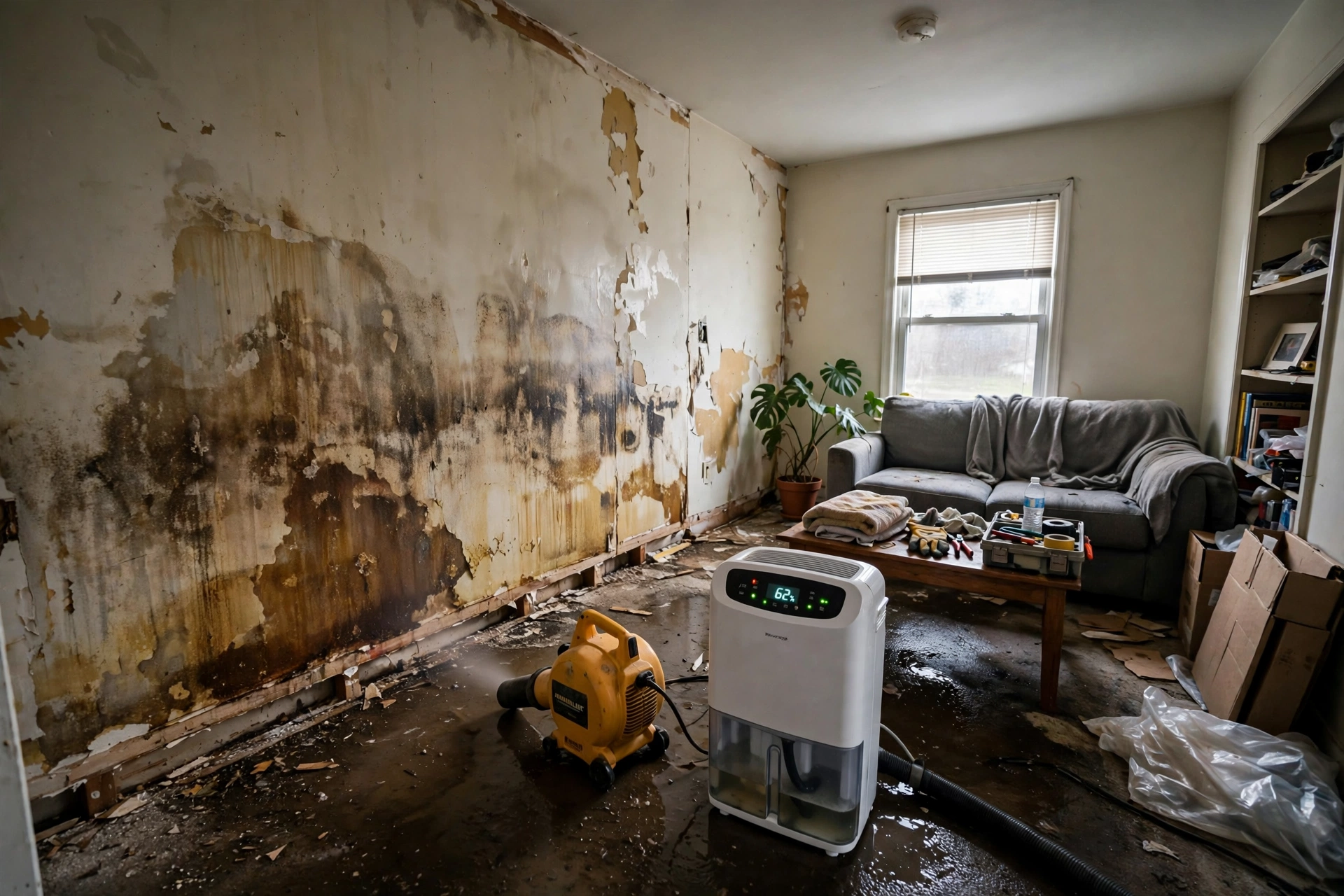
Because a handled water event and a dry structure are two different things. Fans and open windows dry what you can touch — the carpet surface, the baseboards, the face of a wall. Inside the wall cavity, under the flooring, and in the insulation, moisture can sit for weeks. Mold does not need the room to feel damp. It needs the material to stay wet, and it can get started within 24 to 48 hours of the event.
So the sequence we hear most goes like this: a pipe bursts or the sump quits, the visible water gets handled, life moves on — and then the smell arrives, or a stain blooms on the ceiling below, or the baseboards start to swell. That in-between stage, after the emergency and before the growth is obvious, is exactly what Mold After Water Damage Arvada work covers. If water is still coming in at your place, start with our emergency mold service page — that is the first-hours playbook. This page is for what happens next.
02 Why People Call
The carpet felt dry, so the job felt done. Nobody metered the wall behind it — and that is where the colony started.
A musty smell two or three weeks after a flood usually means growth somewhere hidden, still feeding on material that never dried.
The water claim paid out and closed before the mold appeared. Now there is a second problem, and a paper trail to rebuild.
A small stain at the baseboard became a soft wall and a room that smells. Hidden growth does not stay the size you found it.
03 Drying Decides It
The first 24 to 48 hours after a water event are the cheapest hours you will ever get. Material dried inside that window usually stays clean. Material still wet past it can begin to colonize — and once growth is established inside a wall, no amount of surface drying fixes it.
Surface-dry is not structure-dry. Drywall wicks water upward behind the paint. Insulation holds moisture against the studs. Laminate and hardwood trap it against the subfloor. That is why every Mold After Water Damage Arvada job we scope starts with a moisture meter and a probe, not a guess — the meter finds the wet the eye cannot.
Drying you can verify beats drying you can feel. If the readings are high, the written scope says honestly what has to open up. If they come back low, we tell you that too — and there is no job to sell you.
04 The Usual Suspects
Almost any water that stays where it should not. These five account for most of the post-leak calls we run around Arvada:
A frozen line lets go during a chinook thaw, soaks a wall or ceiling cavity, and gets repaired — while the cavity it filled stays wet for weeks.
The pump quits during melt week, the pit overflows once, and the finished basement drinks it in through the cove joint where wall meets floor.
A slow tank or fitting leak can run for weeks behind a utility-room wall before anyone connects the smell to the appliance.
Supply lines and drain hoses leak small amounts under floors and behind cabinets — slow, hidden, and steady enough to feed a colony.
Ice dams and worn flashing push water into attic insulation and down inside walls, often far from the one drip you actually saw.
Plenty of calls start with a smell and no known event at all. Tracing the moisture pathway back to its source is the first part of the inspection either way.
05 Paperwork
Mold that follows a sudden event — a burst pipe, a failed water heater — is the kind insurers most often cover. Mold blamed on a slow, long-running leak is the kind they most often deny. Either way, mold coverage is commonly capped, typically between $1,000 and $10,000, and a sump-pump failure usually needs a separate water-backup endorsement on the policy to count at all.
What protects you is a timeline. Photograph the growth and the water source with dates on them, keep the plumber's invoice from the original repair, and do not tear anything out before it is documented. If your water claim already closed, call your adjuster and ask the question with that paper in hand — a dated photo set and a written inspection report are what that conversation is built on.
We write our scopes so an adjuster can read them: the source, the dates, the affected materials, line by line. And one honest note that applies to every company in this trade, us included: Colorado does not license mold remediators, so judge the paperwork, not a badge.
06 Who Calls Us
Most Mold After Water Damage Arvada calls come from one of four situations:
You did the fans-and-mops part right. The part nobody can see — inside the wall, under the floor — is the part we check with a meter.
A tenant reports a smell weeks after a plumbing fix. Under Colorado's SB 24-094, a written mold notice starts a 72-hour clock to begin containment and stop the source — documented work matters.
Growth found before you list becomes a disclosure question: Colorado's SPD19 form asks about moisture and mold reports. A documented cleanup with lab results is the cleanest answer you can hand a buyer.
The inspection missed it; the smell did not. We document what we find and when we found it, so you know exactly what you are dealing with.
07 The Local Picture
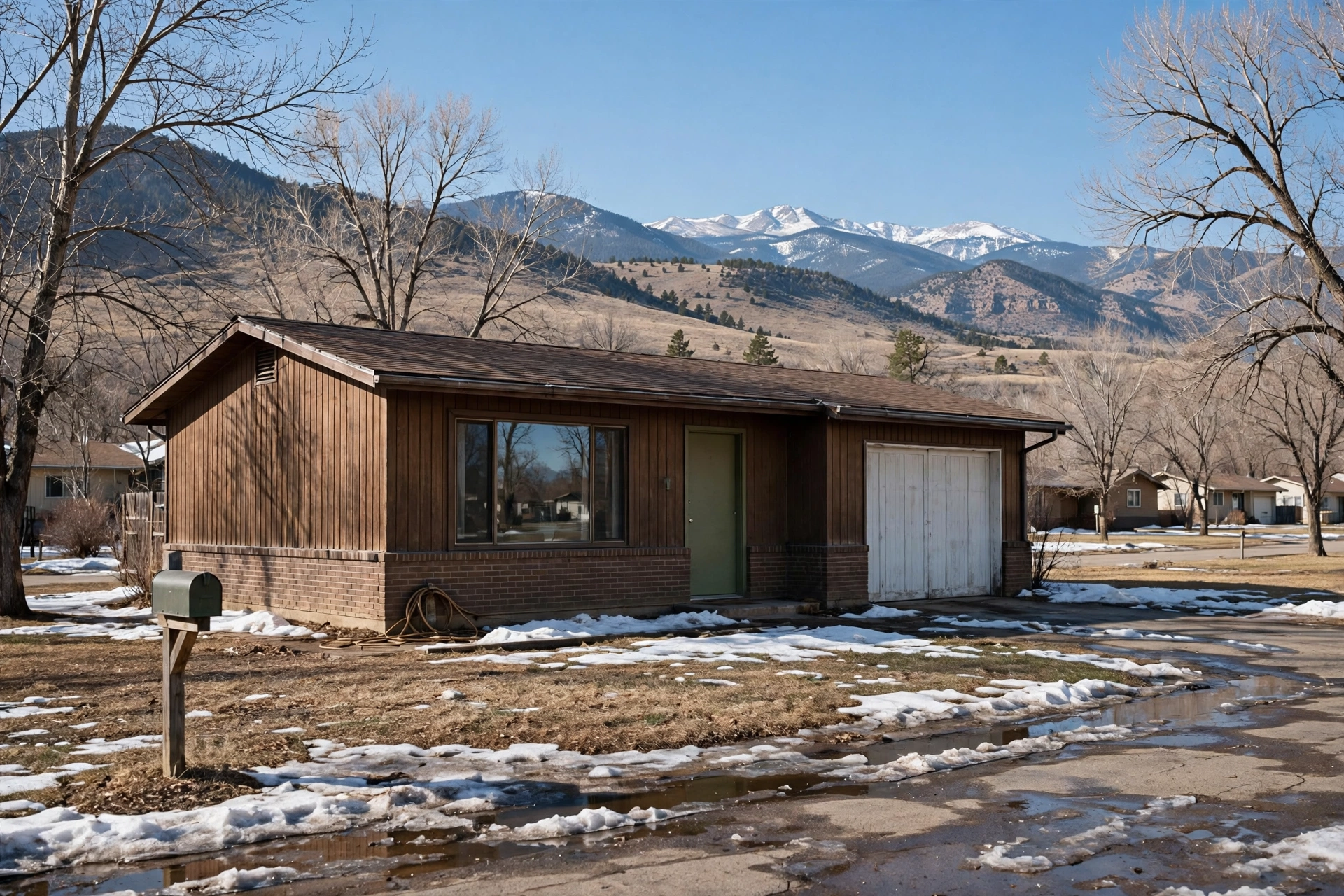
Spring snowmelt writes most of our calendar: weeks of meltwater pressed against foundations, sump pumps running until they quit, cove joints weeping into finished basements in Lake Arbor, Club Crest and the postwar ranches. Winter writes the other half — chinook freeze–thaw cycles burst pipes in the cold snaps between warm spells, and the water often runs inside a wall long before it shows on one.
At the extreme end sits September 2013, when Leyden Creek overflowed and Ralston Creek breached the Croke Canal and basements filled at flood scale. Most post-water calls are far smaller than that, but they follow the same below-grade pathway, one quiet leak at a time — which is why our inspections after any water event start below grade and work up.
08 Get Started
Request Inspection Online
Tell us what you are seeing — the smell, the stain, the flooded corner. We will call back with next steps.
Prefer to talk? Call (720) 794-0650.
09 FAQ
Yes — that timing is typical. Mold can begin growing within 24 to 48 hours on material that stays wet, but it grows where you cannot see it: inside wall cavities, under flooring, in insulation. The smell or stain often surfaces one to three weeks later, once the colony is big enough to notice. A moisture reading and a look behind the baseboard usually settle where it started.
It depends on how far the growth spread before it was found. Published local figures put a typical Arvada mold job at $1,600–$2,900, with larger published jobs at $1,500–$4,500 — those are overall job ranges, and your number comes from the written, itemized scope we hand you after the inspection, before any work begins.
Fans dry surfaces, and surfaces are the easy part. Wall cavities, insulation, and the space under flooring can hold moisture for weeks after the room feels dry. The honest test is a moisture meter, not a hand on the carpet — if readings inside the wall are still high, drying is not done, whatever the surface feels like.
Sometimes — it helps that the mold follows a sudden, documented event rather than a slow leak. Mold coverage is commonly capped, typically $1,000 to $10,000, and sump failures usually require a water-backup endorsement. Bring your adjuster a timeline: dated photos, the plumber's invoice from the original event, and a written inspection report. That paper is what the conversation runs on.
On tile or glass, a small surface patch is a cleaning job. On drywall, wood, or carpet backing — the materials a water event actually soaks — bleach mostly lightens the surface while the growth stays rooted in the material, and the added water can feed it. If the growth traces back to a leak inside a wall, it is a removal question, not a cleaning one.
The same way we run every job: the S520 process, then clearance testing read by a third-party lab — never by us — and a written report you keep. And the moisture source that started it gets fixed as part of the scope, because proof that lasts means the water stays gone too.
The smell, the stain, the flooded corner — whatever brought you here, the next step is a look, a moisture reading, and a written scope you can hold us to.
Free, no-obligation quotes · Written scope before work starts · Third-party lab clearance