"Your roofer stopped the job."
You were pricing shingles. Now the roofer is showing you phone photos of blackened decking. He is right — suddenly your roofing project has a mold project inside it. Sequencing the two jobs is most of the battle.
— Arvada, Colorado · Attic Mold & Ventilation
Most attic mold is discovered by somebody else — a roofer pricing a replacement, an inspector with a flashlight — after winters of growing on bath-fan air vented into the roof. Attic Mold Removal Arvada work is its own trade: containment sealed from below, colonized insulation handled honestly, decking cleaned and treated — and the venting mistake corrected, or the growth returns.
Start with a look through the hatch and a moisture reading — the written scope comes first.
01 Above the Ceiling
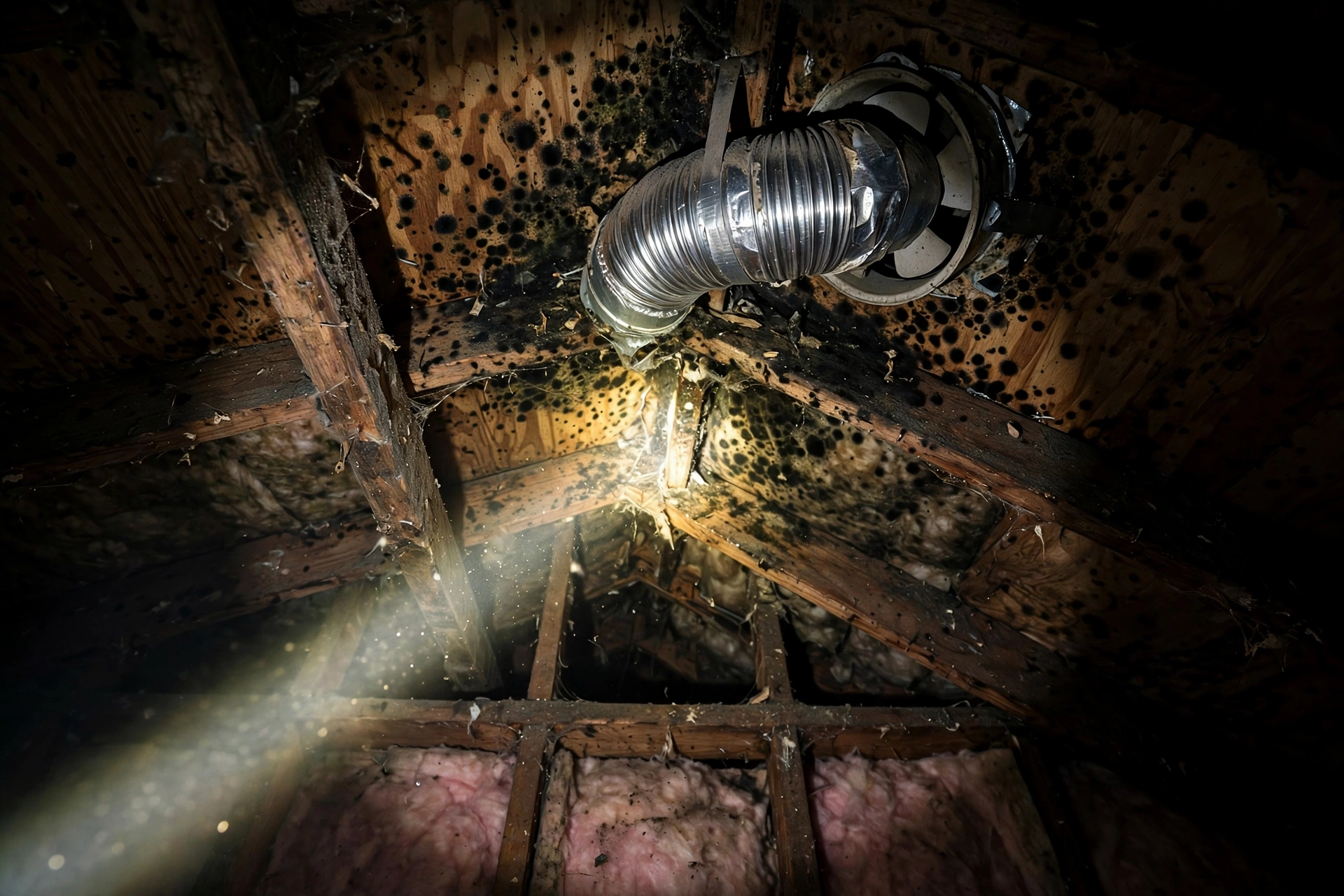
It starts with how the mold got there — in an attic, the growth is almost never the disease, just the symptom. We inspect from the hatch: decking checked, insulation mapped, moisture read, every source named — the bath fan duct ending mid-attic, the flashing dripping for years, the soffits stuffed shut. Then comes the written, itemized scope: what comes out, what gets treated, and what gets fixed so the moisture stops.
A complete attic scope with us names:
One more piece of honesty: Colorado does not license mold remediators, and CDPHE does not regulate mold — no state stamp to hide behind. Judge the work on the scope, the process, and the clearance result.
02 Why People Call
Attic mold almost never announces itself with a smell in the hallway — the living space can seem fine for years while the decking quietly darkens. It arrives as a surprise, usually with a clock attached.
You were pricing shingles. Now the roofer is showing you phone photos of blackened decking. He is right — suddenly your roofing project has a mold project inside it. Sequencing the two jobs is most of the battle.
The buyer's inspector climbs through the hatch, and the report comes back with photographs and the word "mold" in bold. Now a closing date depends on paperwork: a written scope and a clearance result on file. A documented cleanup is the cleanest answer you can hand a buyer.
The honest answer: colonized insulation cannot be cleaned and does come out — but clean, dry insulation is not mold food, and most of the blanket usually qualifies. Anyone quoting a full-attic gut before mapping yours is guessing.
03 Where the Water Comes From
Four sources account for nearly every attic we open here — three of them venting and flashing mistakes, not roof failures. That is why a new roof alone does not fix attic mold.
The bath fan deserves its own paragraph, because nobody else in Arvada seems to be writing it. In Arvada's seventies and eighties ranches and split-levels — and in remodels since — fan ducts were simply run into the attic and left there. Every shower since has sent warm, wet air against decking near freezing all winter: it condenses, frosts on the nail tips, and melts back into the wood. Repeat that for twenty winters and the decking grows exactly the colony your roofer just photographed.
04 How We Work
This is the sequence every Attic Mold Removal Arvada job follows with us — the S520 order, adapted to a space reached through a hatch.
We map the attic before a price is named: moisture readings on decking and trusses, insulation probed, every source traced. The visit produces your itemized scope.
When the species or the paperwork matters — a home sale, a dispute — samples go to an accredited third-party lab first.
The hatch and living space below are sealed; the work zone runs under negative air — what we stir up stays in the attic.
Colonized insulation is bagged and comes out. Decking and framing are HEPA-vacuumed, scrubbed, and treated — growth physically removed, never fogged over or painted shut.
The step that decides whether we meet again: bath fans ducted outside, soffits cleared and baffled, leaks repaired — or flagged for your roofer, in writing.
A post-job check of treated surfaces — lab clearance where testing applies — plus photos of the venting fix. You finish with a written report, not our say-so.
05 Who Calls Us
Most Attic Mold Removal Arvada calls arrive sideways — a roofer's photo, an inspector's report, a remodel that opened a ceiling. Three callers, mostly:
The roofing crew is booked, the shingles ordered — and then the attic photos land in your inbox. You need the decking treated without losing your slot in the schedule. We sequence around roof work and put the timing in writing for both crews.
A flagged attic can stall a closing faster than almost any other inspection line. Sellers want it handled and documented before the deadline; buyers want proof it was more than a spray-and-pray. A written scope and a clearance result give both sides the same paper.
Around Lake Arbor and Club Crest, the housing stock is the story: baths added and fans replaced over forty years, ducting "finished" into the attic by whoever held the drill. If your home predates 1980, its attic venting deserves one look.
06 The Local Picture
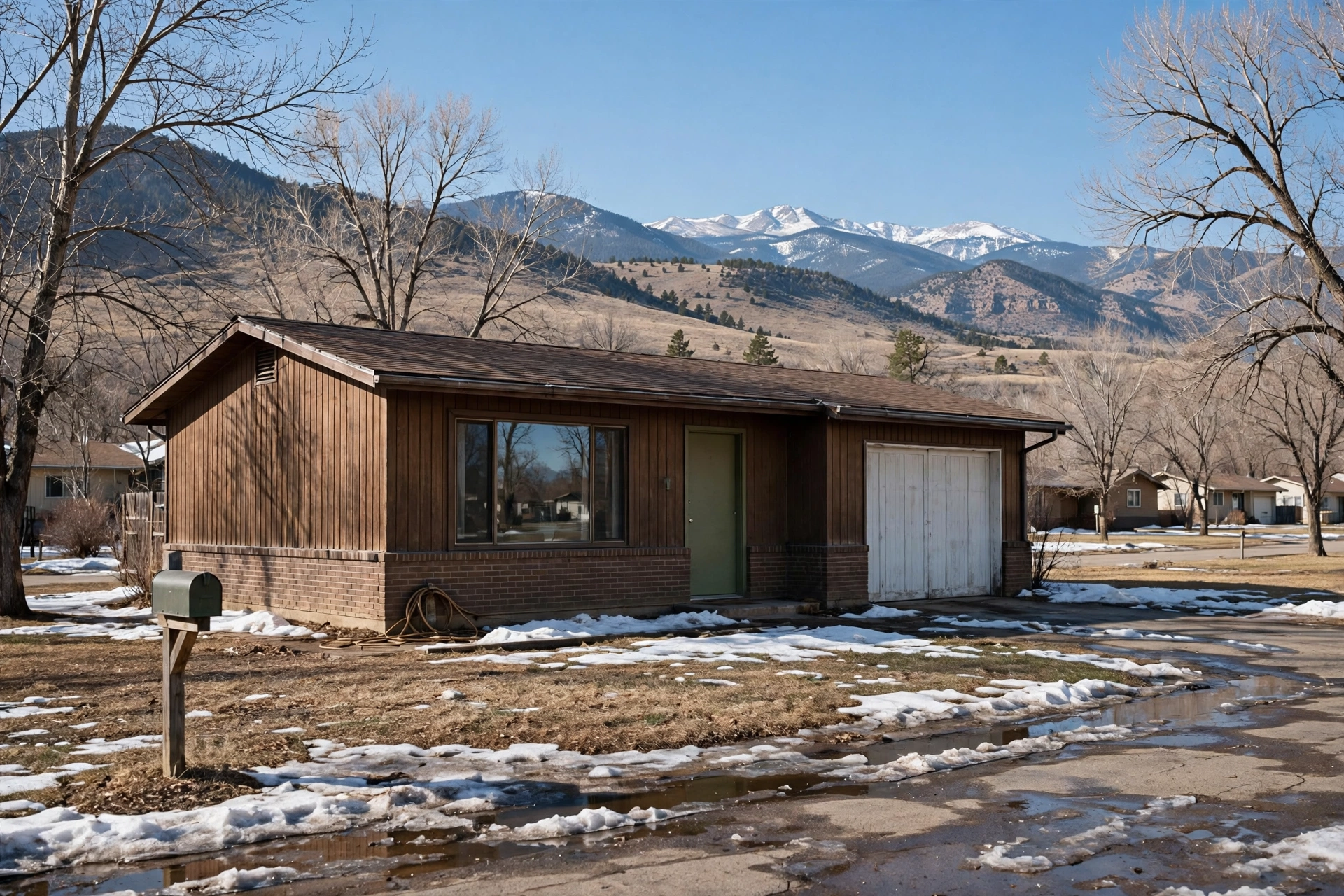
The median Arvada home was built in 1979, and 52.5 percent went up before 1980. Those attics were vented to the standards of the day — then remodeled for four decades: bathrooms added, fans swapped, ducts left pointing at the decking.
Arvada sees roughly 60 inches of snow a year and hard freeze–thaw swings. Warm house air leaks up through hatches and fixtures; frost forms under the cold decking; a sunny afternoon melts it into the wood, all season long. North-facing eaves hold snow longest: ice-dam country. Dry city, wet attics — the moisture was never coming from the weather. It was coming from the house.
07 Get Started
Request Inspection Online
Tell us what you are seeing — the smell, the stain, the flooded corner. We will call back with next steps.
Prefer to talk? Call (720) 794-0650.
08 FAQ
Most of the time it isn't the roof — it's the bathroom. A bath fan vented into the attic instead of outside pumps warm, wet air onto cold decking with every shower; in winter it condenses, freezes on the wood, and melts back in. Winter after winter, the decking stays damp long enough to grow a colony.
Attic work is priced from the written scope. Published local figures put a typical mold job in Arvada at $1,600–$2,900 and larger multi-area jobs at $1,500–$4,500 — overall job figures, not an attic quote. The price turns on how much insulation is colonized and how much decking needs treatment; the scope names both first.
No — only the insulation that is colonized or water-damaged. It cannot be cleaned, so affected sections come out bagged; clean, dry insulation is not mold food and generally stays. We map first; the scope lists which areas come out and why. Be wary of anyone who quotes a full-attic gut sight unseen.
Fogging kills surface growth and leaves everything that matters behind: the colony in the wood, the spores in the insulation, the moisture still arriving. The S520 process is physical — HEPA vacuuming, scrubbing, treating — plus the venting fix. A fogged attic with the same bath fan usually regrows the same mold within a few winters.
Mold returns when moisture returns. Which is why the venting correction is a line item in our scope, not an upsell: bath fans ducted outside, soffits breathing again, leaks repaired. Fix the source with the growth, and the attic stays too dry for mold.
The roofer is right to pause — a new roof over colonized decking traps the problem under fresh shingles. The sequence: we treat the attic and decking first, or alongside the roofing schedule; your roofer replaces any spent decking; the new roof goes over clean, dry wood. We put the timing in writing.
The smell, the stain, the flooded corner — whatever brought you here, the next step is a look, a moisture reading, and a written scope you can hold us to.
Free, no-obligation quotes · Written scope before work starts · Third-party lab clearance