The musty blast at startup
It kicks on, and the first minute of air smells like a wet basement — then fades until the next cycle. The pattern points at the system: growth near the coil or pan, delivered by the blower in a concentrated first breath.
— Arvada, Colorado · HVAC & Duct Mold
If a musty smell rolls out of the vents when the heat or AC starts, the growth is not in the room you are standing in. It is in the air handler — on the coil, in the drain pan, along the duct lining — and the blower delivers it house-wide. We trace it, treat the source, and prove the air clean at the end.
Start with an inspection and photos — before anyone quotes you a duct replacement.
01 The System Itself
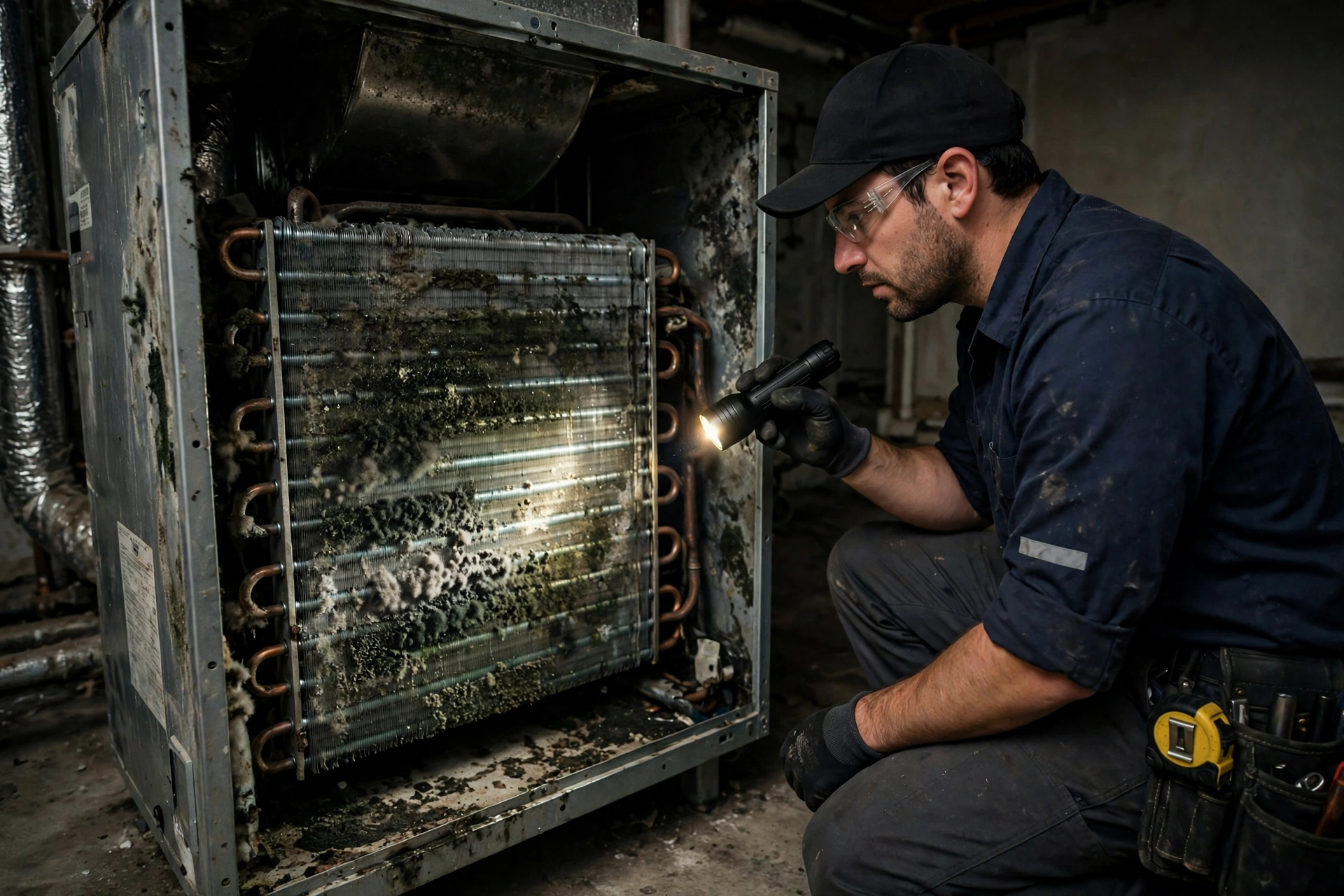
It covers the whole air path, not just the vent covers. We open the air handler, inspect the coil and drain pan, look inside representative duct runs, and check where moisture collects — then treat the growth, deal honestly with what cleans and what cannot, fix the moisture feeding it, and verify the result. Fogging a duct touches none of that.
Here is what that means on a real system:
02 Why People Call
HVAC mold announces itself with air, usually after the wrong room has been cleaned twice. That is why HVAC Mold Removal Arvada starts at the air handler instead of the vent cover.
It kicks on, and the first minute of air smells like a wet basement — then fades until the next cycle. The pattern points at the system: growth near the coil or pan, delivered by the blower in a concentrated first breath.
A kid's bedroom smells; a guest room feels irritating — concerns we hear often, taken seriously, without pretending to be doctors. But the growth is often two rooms and a floor away, inside the air handler. Bleach in the symptom room changes nothing — the system keeps reseeding the air.
Full duct replacement is the most expensive sentence, sometimes said before anyone opens the handler. Some materials clean up well; some do not. Never accept the verdict before the inspection — photos first, then the call, in writing.
03 The Colorado Angle
Plenty of Arvada's older ranches still cool with an evaporative — swamp — cooler: by design, a box of standing water bolted to the roof or window. Pads wet all summer, a pan underneath, a pump and float that scale up and leak — all plumbed into the duct system that heats the house all winter.
When pads stay saturated past their life, or the pan overflows, or the drain clogs, the cooler becomes a reservoir — moisture feeding the ductwork downstream. It is the one mold source most companies here never mention, because most are not from here. Our inspections include the cooler: pads, pan, drain, and where it meets the duct.
04 How It Spreads
The air handler is where moisture, dust, and darkness meet moving air. Condensate forms on the coil by design and should leave through the drain pan and line. When the drain clogs or the pan holds water, growth starts where the blower can reach it — and the ducts do the distributing.
Duct interiors collect the other ingredient: dust. In flex duct and lined ductboard, dust settles into a surface that holds moisture and growth too deep for surface cleaning to reach. Hence the honest answer — "it depends on the material" — and the photos of your own runs before we recommend anything.
05 How We Work
This is the sequence every HVAC Mold Removal Arvada job follows with us — system off, evidence first, and no replacement sold before its material earns it.
We open the air handler, photograph the coil, pan, and blower, and inspect representative duct runs on each branch. You see what we see before scope comes up.
The system stays off, registers sealed, so loosened material cannot blow into clean rooms. Containment goes up wherever growth is disturbed outside the unit.
Coil and pan are cleaned and treated with antimicrobial, sheet-metal duct interiors are HEPA-vacuumed and wiped down, and the condensate drain is cleared and tested.
Bare sheet metal usually cleans up and stays. Flex duct and lined ductboard colonized through the lining cannot be reliably cleaned — those sections get replaced, only those, each named in the scope.
A cleaned system over a clogged drain is a repeat job. We correct the drainage, clear the line, and service the swamp cooler's pads, pan, and drain.
The system runs, air is checked at the registers, and clearance testing — third-party lab read where it applies — closes the job with a written report.
06 Who Calls Us
Most HVAC Mold Removal Arvada calls start as a smell or a line on somebody else's report. The three we hear most:
One room smells musty; one kid's allergies are worse at home. We hear the concern and we do not diagnose it — that is a doctor's job. We find whether the system is seeding that room's air, fix the source if it is, and hand you lab-verified results.
The cooler ran all summer and the house has smelled damp since June. Pads, pan, and duct connection get inspected as one system — the furnace blower uses those same runs all winter.
"Possible microbial growth at air handler" on a home inspection report can stall a closing. We inspect, document what is actually there, remediate what is real, and paper it with a clearance report both sides can rely on.
07 The Local Picture
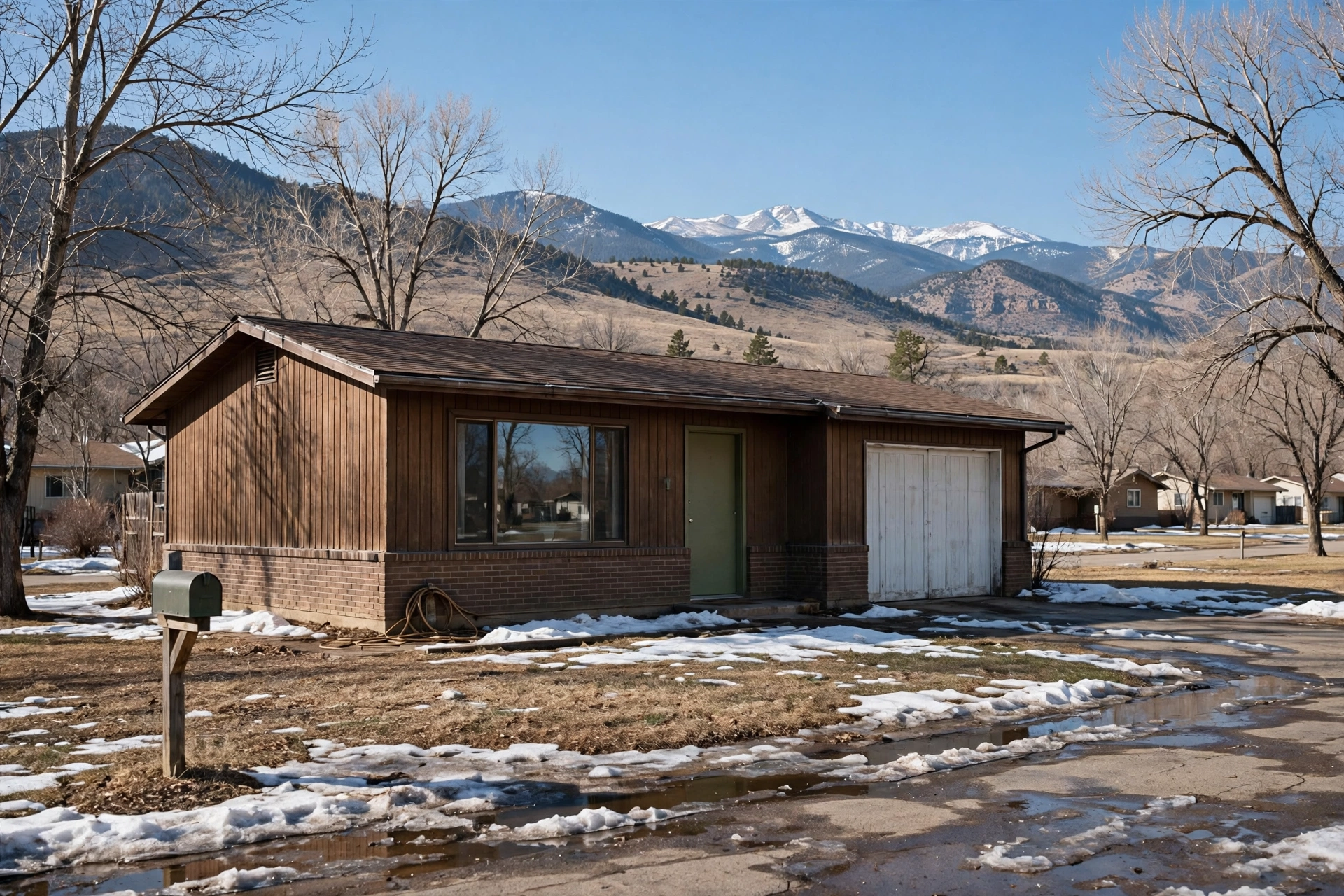
Arvada's median home was built in 1979, and 52.5 percent of the housing went up before 1980 — ranches and split-levels around Lake Arbor and Club Crest, postwar blocks east of Olde Town. Their ducts are original or patched across decades: two furnaces on the same runs, a swamp cooler tied in at the roof, registers cut into trunk lines.
That patchwork is where HVAC mold hides — in the lined plenum nobody has opened since the second furnace, in flex runs through a damp crawl space. We work this stock from 5220 Marshall St, and the inspection assumes a history until the photos say otherwise.
08 Get Started
Request Inspection Online
Tell us what you are seeing — the smell, the stain, the flooded corner. We will call back with next steps.
Prefer to talk? Call (720) 794-0650.
09 FAQ
That startup blast is the signature of growth in the system — usually at the coil or in the drain pan, where condensate keeps things wet. The blower delivers it in the first minute of each cycle. Wiping vent covers changes nothing; the source is upstream.
It depends on how much of the air path is affected and whether duct sections clean up or need replacing. For scale, published Arvada figures for mold jobs overall run $1,600–$2,900 typical, $1,500–$4,500 for larger jobs. Your number comes from the written scope after inspection.
It depends on the material. Bare sheet metal usually cleans and treats reliably. Flex duct and lined ductboard, once growth is into the lining, cannot — those sections should be replaced. We photograph your runs and decide section by section, in writing.
It can be a real contributor. A swamp cooler keeps pads wet and holds water in its pan all summer, plumbed straight into the ducts. Old pads, an overflowing pan, or a clogged drain make it a standing moisture source. We check pads, pan, and drainage as part of the system.
If the source is in the air handler or ducts, yes — treating it addresses every room downstream, including that bedroom. But a one-room smell can also be local: a damp wall, or a basement problem under that room. The inspection checks both paths first.
There is no license to hold — Colorado does not license mold remediators, and CDPHE states it does not regulate mold. Nor is there an EPA certification for this work. Judge us on checkable things: the S520 process, photos, an itemized scope, and third-party lab clearance.
The smell, the stain, the flooded corner — whatever brought you here, the next step is a look, a moisture reading, and a written scope you can hold us to.
Free, no-obligation quotes · Written scope before work starts · Third-party lab clearance