🚨 Emergency Mold Removal — Serving Arvada & the Northwest Metro (720) 794-0650

— Arvada, Colorado · Crawl Space Mold

Crawl Space Mold Removal in Arvada, CO — Found by a Smell, Fixed From Below

Most crawl space mold announces itself as a smell in the rooms above — musty air that survives every cleaning, because it is not coming from the rooms at all. It is rising from below the floor. Crawl Space Mold Removal Arvada calls start exactly there: we trace the air, open the hatch, and find the growth, the water feeding it, and the barrier that failed.

You never have to go down there — send us the inspector's photo, or just describe the smell.

  • Containment Sealed at the Hatch
  • Joists & Subfloor Treated
  • Vapor Barrier Repaired
  • Moisture Source Fixed
  • Written Scope Before Work Starts
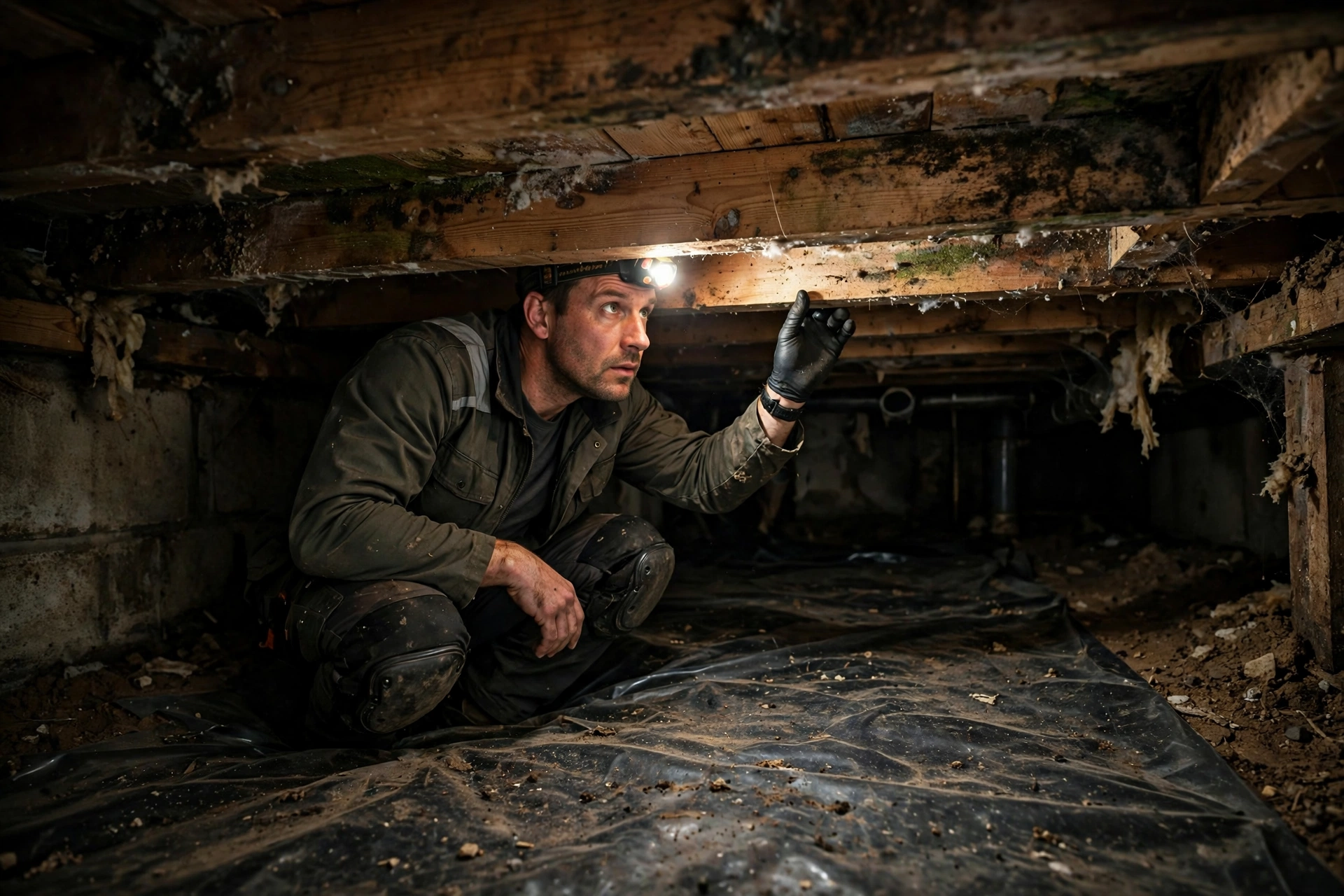
Technician with a headlamp inspecting mold growth on crawl space floor joists in an Arvada, Colorado home

01 Under the Floor

Why Does a Clean House Smell Like a Crawl Space?

Because a share of the air you breathe upstairs has just been downstairs. Warm air rises and leaks out at the top of a house, and the replacement air gets pulled in at the bottom — through the crawl space, then up through the plumbing and wiring holes cut in the floor. That is the stack effect, and it runs all winter. If the crawl space is growing mold, the living space gets a steady supply of that air.

That is also why a Crawl Space Mold Removal Arvada inspection starts with photographs, not guesses. We go through the hatch with a light and a moisture meter, document the joists, subfloor and barrier, and show you exactly what is growing and what is feeding it — before any price is mentioned. The visit covers:

  • Moisture readings on joists and subfloor, bay by bay
  • Vapor barrier coverage and condition, seam by seam
  • Plumbing runs checked for slow, quiet drips
  • Photos of everything, shared with you on the same visit
  • A written scope that separates mold work from structural work

And one promise up front: if what we find is rot rather than mold, we will say so plainly — that is a different trade, and we will not dress it up as ours.

📞 Call (720) 794-0650
02 Why People Call

The Three Moments That Send People Under the House

Nobody schedules crawl space work for fun. The calls we get almost always start with one of these three moments.

"The house smells — and nothing we clean helps"

You have scrubbed the bathroom, washed the curtains, run a purifier — and the mustiness still meets you at the front door. When the source sits under the floor, upstairs cleaning never stands a chance: the air itself is being delivered from the crawl space, hour after hour, through every pipe and wire hole in the floor.

"An inspector's photo just stopped our sale"

The first look most people ever get at their crawl space is a home inspector's flash photo — dark joists, pale fuzz, a caption that freezes a closing. Buyers panic, sellers scramble, and Colorado's disclosure form asks about crawlspace moisture directly. A documented cleanup, with clear photos of our own, is what unfreezes it.

"Tell me honestly — is the floor rotting?"

A fair question, and the honest answer is that mold and rot are different problems. Mold grows on surfaces and can be removed and treated; rot eats the wood itself, and that is a structural call. We treat the mold, meter and probe the wood, and if framing is soft we flag it for a contractor — in writing — instead of guessing or upselling.

03 Why It Grows

Why Crawl Spaces Grow Mold

A crawl space is a shallow, unconditioned box sitting on soil — and soil is never dry. It gives off water vapor constantly, which is why builders lay a plastic vapor barrier over the ground. When that barrier is missing, torn, or pulled away from the walls, the vapor rises straight into the floor framing. Add a slow plumbing drip and still air, and the joists stay damp enough to grow mold for months with no sign upstairs except the smell. Four patterns do nearly all of it:

1 Ground Moisture Bare soil exhales water vapor into the crawl air around the clock. 2 Torn Vapor Barrier Ripped, shifted or missing plastic leaves the soil open and the framing damp. 3 Plumbing Drips A slow supply or drain leak wets one bay at a time — often for months, unseen. 4 Stack Effect Rising warm air pulls crawl-space air up through the floor into the rooms above.
The four patterns we find under Arvada floors. Every written scope we produce names which of them are at work under yours.

The fourth pattern surprises people: the growth does not have to be dramatic to perfume a whole house — it just has to sit in the air path. That is why our scopes treat the barrier and the air path as part of the job, not as extras to sell later.

04 How We Work

How a Crawl Space Job Runs

Every Crawl Space Mold Removal Arvada job follows the same order — eyes first, plastic second, treatment third, and the moisture fixed before the hatch closes.

  1. Access & Assess

    In through the hatch with lights and meters. We map which bays are wet, photograph the joists, subfloor and barrier, and find the water — before anyone prices anything.

  2. Contain at the Hatch

    The access is sealed and the work zone held under negative air, vented outside — so spores stirred up below cannot ride the stack effect into the rooms above while we work.

  3. Remove & Treat

    Colonized insulation comes out and is bagged below. Joists and subfloor are HEPA-vacuumed, scrubbed and treated with antimicrobial. Material too far gone is cut out — never coated over.

  4. Repair the Barrier

    The vapor barrier is repaired or replaced where it failed — seams overlapped and sealed, edges run up the foundation walls — so ground moisture stays in the ground.

  5. Fix the Moisture

    The drip, the drainage, the downspout dumping at the wall — whatever fed the growth gets addressed, and the framing is dried and meter-checked before we close the hatch. A written report ends the job.

05 Who Calls Us

Who Calls Us About Crawl Spaces

Most Crawl Space Mold Removal Arvada calls come through one of three doors — a smell, a sale, or a tenant.

Homeowners chasing a smell

The rooms look clean; the smell says otherwise. You want someone to actually go under the house, come back with photos, and tell you plainly what is growing and why — not sell you a scented treatment for air that is being made below the floor.

Buyers and sellers mid-transaction

An inspector's photo has put a closing at risk and the clock is loud. You need the growth documented, treated and re-photographed on a deadline — with paperwork a buyer, a lender and a disclosure form can all live with.

Landlords and property managers

Your tenants smell it first, and under Colorado's SB 24-094 a written mold complaint starts a 72-hour clock. We document conditions below the floor, treat what is there, and paper the file as we go.

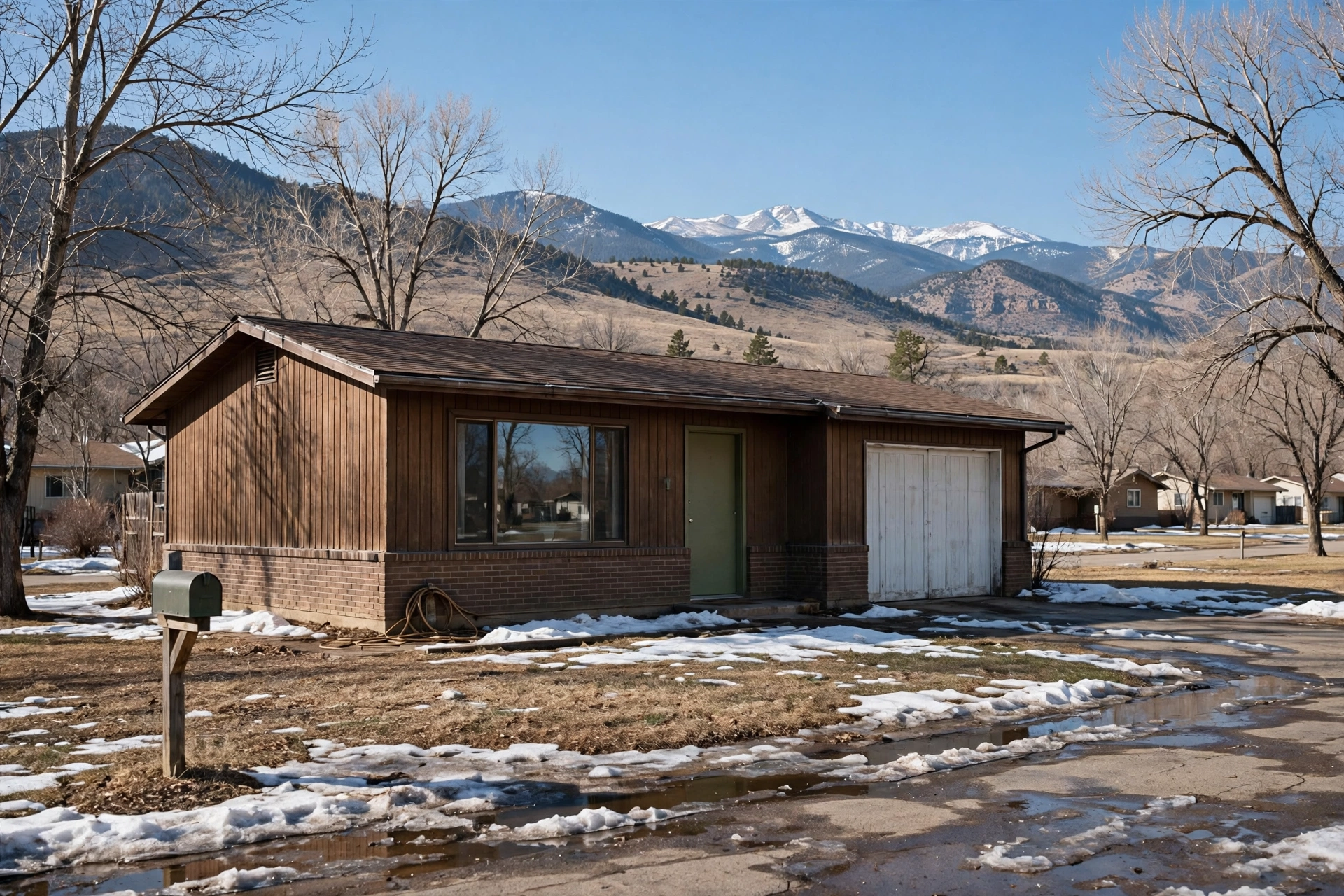
1970s ranch home in Arvada, Colorado with melting snow along the foundation and the Front Range behind it
Postwar ranch stock like this often sits over a crawl space that has not been opened in decades.

06 The Local Picture

Arvada's Crawl-Space Houses: Alta Vista, Lamplighter, the Southeast Ranches

Much of Arvada is basement country, but a real slice of the postwar stock was built over crawl spaces instead — the ranches of Alta Vista and Lamplighter, the postwar streets in the southeast around Gold Strike, and plenty of later additions hung off basement houses. Those crawl spaces are sixty-plus years old now, and most have never had their vapor barrier touched since the house went up.

The soil underneath does them no favors. Arvada sits on bentonite-bearing clay that swells as it wets and holds moisture against foundations, and spring snowmelt plus summer irrigation keep crawl-space soil damp for long stretches. Bare soil, a shredded barrier and still air are the whole recipe — which is why a local scope always includes the barrier and the moisture, not just the growth on the joists.

07 Get Started

Request Inspection Online

Tell us what you are seeing — the smell, the stain, the flooded corner. We will call back with next steps.

Prefer to talk? Call (720) 794-0650.

08 FAQ

Crawl Space Questions, Answered Straight

Usually the smell tells on it: a musty odor that is strongest at floor level, near plumbing walls, or when the furnace kicks on and starts moving air. The confirmation is a look through the hatch — lights, moisture readings on the joists and subfloor, and photos. If the crawl space turns out clean, we will show you those photos too and point the search somewhere else.

Crawl space jobs are priced from the written scope, because access and extent run the number — a two-bay cleanup and a whole footprint are different jobs. As a yardstick, published figures for Arvada mold jobs overall put a typical job at $1,600–$2,900, with larger jobs at $1,500–$4,500. Your scope names your number before work starts, and it does not move.

Often repaired. If the plastic is sound but torn, shifted or pulled short of the walls, we patch, overlap and reseal it. Sections that are shredded, buried or missing altogether get replaced. What matters is full coverage with sealed seams — a barrier covering most of the soil is barely better than none.

In most smell-only calls, yes. Houses breathe from the bottom up: air escapes at the top, and replacement air is drawn in low — through the crawl space and the holes cut in the floor for pipes and wires. Treat the growth, fix the moisture and seal the barrier, and the upstairs air clears along with it.

Then we will tell you so, in writing, with photos. Mold treatment is our trade; structural rot is a framing contractor's. We meter and probe the wood during assessment, treat the mold that is ours to treat, and flag anything soft or compromised rather than covering it up and calling it done.

Usually, yes — the work happens below the floor, contained at the hatch with the air vented outside, and daily life upstairs goes on. If a job involves heavy growth plus a wide-open floor system, we may suggest being out for the busiest day. We will call it straight before the scope is signed.

Ready to Deal With Your Mold Problem?

The smell, the stain, the flooded corner — whatever brought you here, the next step is a look, a moisture reading, and a written scope you can hold us to.

Free, no-obligation quotes · Written scope before work starts · Third-party lab clearance