🚨 Emergency Mold Removal — Serving Arvada & the Northwest Metro (720) 794-0650

— Arvada, Colorado · Full-Process Remediation

Mold Remediation in Arvada, CO: The Whole Job, Not Just the Cleanup

Anyone can cut out a moldy wall. Remediation is everything around that cut: the source found and fixed, the room sealed, the air scrubbed, and an independent lab confirming the result. You approve an itemized scope before any plastic goes up — and that scope is the price.

Start with a look and a moisture reading — the written scope comes first.

  • Written Itemized Scope First
  • ANSI/IICRC S520 Process
  • Sealed Containment
  • Third-Party Lab Clearance
  • Moisture Source Fixed
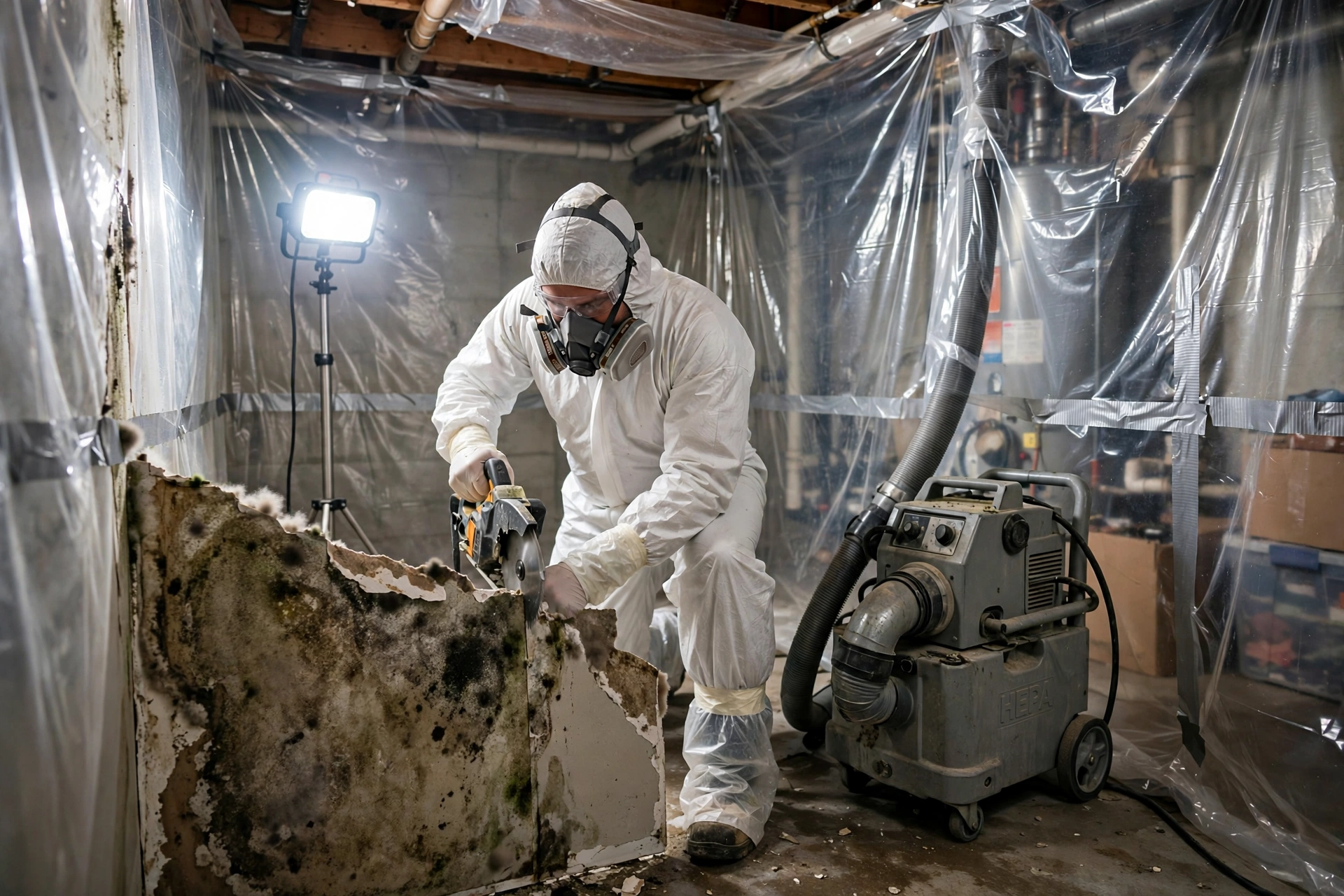
Technician removing moldy drywall inside a sealed plastic containment area during a mold remediation job in Arvada, Colorado

01 The Full Process

What Does Mold Remediation Arvada Include?

It includes what most quotes leave out. A job with us starts by mapping the moisture, not just the stain — then a written scope naming what gets contained, what comes out, and where the finish line sits. The work follows the ANSI/IICRC S520 sequence: contain, remove, scrub, dry, confirm. And it ends with a clearance test read by a third-party lab, because the company that did the work should not grade it.

Here is what that means on a real job:

  • The moisture source identified, its fix written into the scope
  • An itemized price approved before work begins
  • Plastic containment and negative air keep the rest of the house clean
  • Colonized material removed, framing HEPA-vacuumed and treated
  • A lab report at the end saying, in writing, that the job passed

One more thing, because nobody in this trade likes saying it: Colorado does not license mold remediators, CDPHE does not regulate mold, and no EPA certification exists for this work — any website implying otherwise is decorating. That is why we lean on checkable things: a published process, a written scope, and independent lab results.
02 Why People Call

Three Worries We Hear on Almost Every First Call

Most homeowners who reach us have already had a bad experience — a scary quote, a quick fix that failed, a spot that keeps growing. Here is how a full remediation answers each one.

"Am I about to be overcharged?"

Quote shock is the number-one story in this business — a twelve-inch ceiling spot drawing a four-figure bid, a verbal number that doubles once the wall opens. Our defense is boring and total — published ranges on this page, and an itemized scope tied to your actual walls before you owe a dollar. If a line item can't be explained, it doesn't belong on the quote.

"We fixed this once. It came back."

Recurrence is what happens when a company kills the growth and leaves the water. Bleach, fogging, paint — the colony fades, the leak keeps dripping, and by next melt season the stain is back. Remediation fixes the source as part of the job, dries to standard, and proves the endpoint with a lab test — so "fixed" means the conditions that grew it are gone.

"How far has it actually spread?"

The patch you can see is the part of the colony that ran out of hidden room. Behind finished drywall, under flooring, inside wall cavities — growth follows the water, quietly. That is why we map moisture through the wall assembly before price comes up: the scope prices the full extent, not the visible tip plus a surprise.

03 How We Work

Six Steps, First Visit to Lab Report

This is the sequence every Mold Remediation Arvada job follows with us — the same six steps, in order, whether the job is one bathroom wall or a whole finished basement.

  1. Assess

    We trace the water before we touch the mold: meters across walls and floors, the leak pathway mapped, the full extent established. The visit produces your itemized scope — the document the whole job is held to.

  2. Test

    When a job calls for data — a home sale, a dispute, a health worry — samples go to an accredited third-party lab first, so the plan rests on readings, not guesses. You receive the lab's own report.

  3. Contain

    The work area is sealed in plastic and held under negative air with HEPA filtration, one controlled way in and out. Spores stirred up during removal stay in the work zone, not in your living space.

  4. Remove

    Porous, colonized material — drywall, insulation, carpet — is bagged inside containment and carried out. Framing is HEPA-vacuumed and treated with antimicrobial. Nothing gets fogged over or painted shut and called clean.

  5. Scrub

    HEPA scrubbers wash the air for 24 to 48 hours, surfaces get a detail pass, and the structure is dried to standard — verified by meter, not by a hand on the wall. This step prevents repeat jobs.

  6. Confirm

    With the moisture fix in place, clearance testing by the independent lab confirms the space is back to normal. The written report ends the job, not our say-so.

04 Who Calls Us

Who Calls Us for Remediation in Arvada

Different front doors, same need: the problem handled once, documented, and proven at the end.

Owners living over a finished basement

Your family room or home office is down there — and so is the growth, behind drywall where snowmelt and a tired sump pump quietly feed it. You want the wall opened once: source fixed, colony out, lab proof in hand before it is closed back up.

Sellers with a disclosure to sign

Colorado's seller disclosure (Form SPD19) asks whether the basement or crawlspace has had moisture or seepage problems, and whether any mold reports exist. "We had it professionally remediated — here is the scope and the clearance report" is the strongest answer a buyer can be handed — best done before the listing photos, not during a closing crunch.

Landlords on the 72-hour clock

Under SB 24-094, once a tenant notifies you in writing about mold tied to dampness, the clock runs: containment started, the water cut off, and HEPA filtration running inside 72 hours — follow-through documented. We work to that timeline and paper every step, so your file shows exactly that.

05 Cost, In Writing

What Remediation Costs in Arvada

Before you call anyone, it helps to know what the market charges. The table below gathers the published numbers — local companies' pages plus one national guide, sources labelled — so any quote can be checked against them, ours included.

ServiceTypical RangeSource
Typical Arvada remediation job $1,600–$2,900 Local published range
Larger, multi-area remediation $1,500–$4,500 Atlas Contracting & Environmental — published range
Mold inspection $250–$500 Local published range
National average remediation job $2,368 Angi — national average, not an Arvada price
Larger local jobs Typical local job Angi national avg $1,500–$4,500 $1,600–$2,900 $2,368 point $0 $4,500
Published remediation ranges, dollars per job, from Arvada-area companies' own pages; the Angi figure is a national average shown for scale, not a local price.

What actually moves the price

  • How much growth is hiding — the visible patch plus whatever moisture mapping finds behind the wall — priced once, at the real extent.
  • What can be cleaned vs. what must go — framing usually survives a HEPA-and-treatment pass; drywall, insulation and carpet do not, and removing them is real money.
  • The moisture repair itself — a replacement sump pump, regrading, or a plumbing fix ends the problem, priced as its own line, not buried.
  • Containment and clearance — sealed barriers, negative air and lab testing scale with job size.

Your quote is the scope, itemized — approved before the first barrier goes up, and it is the number you pay.

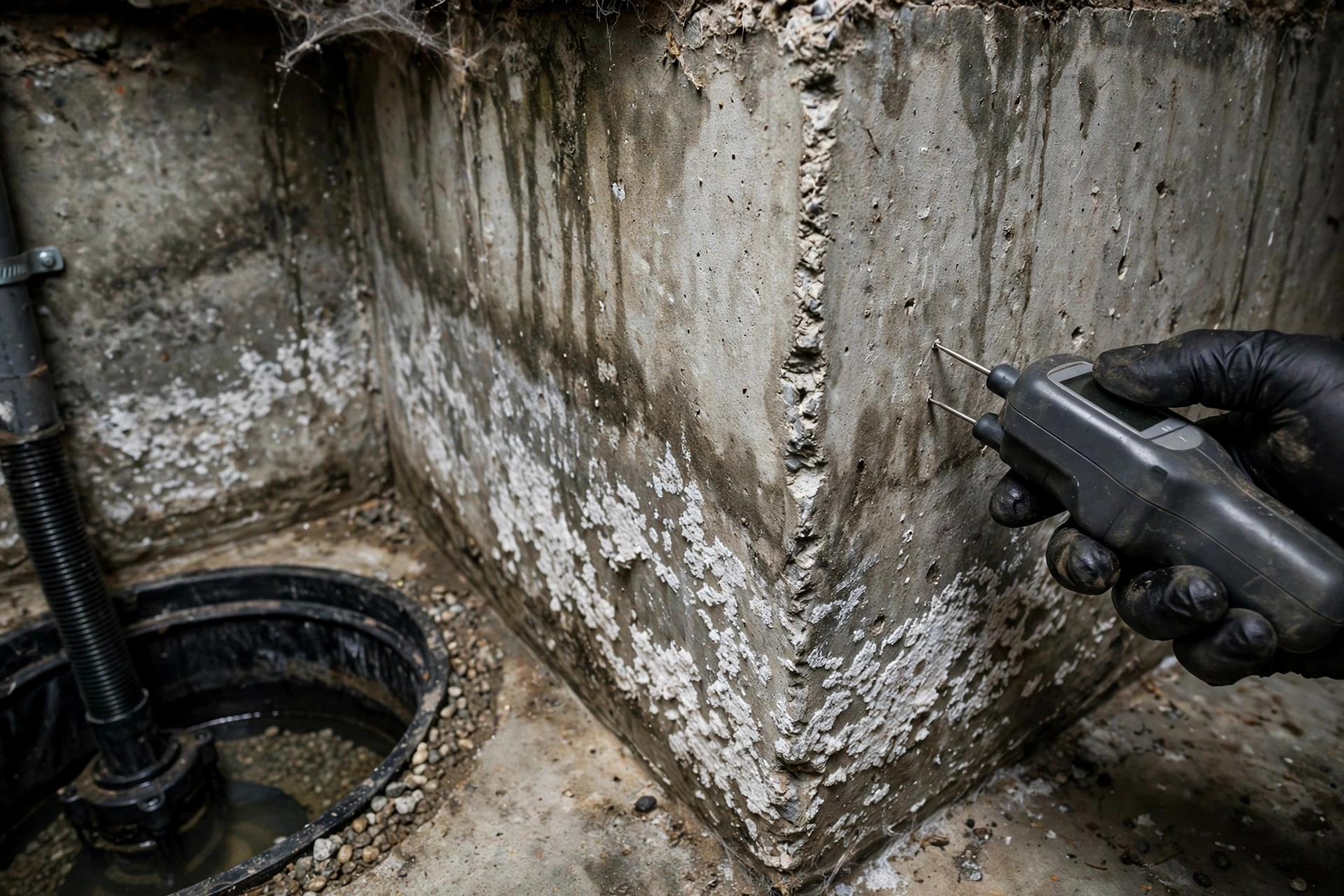
Basement sump pump pit with water staining on the foundation wall and a moisture meter reading in Arvada, Colorado
The sump pit: the hardest-working appliance in an Arvada basement — and the first thing we check.

06 The Local Picture

Why Remediation in Arvada Starts Below Grade

Much of this city sits over Pierre Shale laced with bentonite, a clay the Colorado Geological Survey says can more than double in volume as it soaks up water. That swell-and-shrink cycle works foundations year after year, opening the seam where the wall meets the floor — and every spring, snowmelt finds it. When a sump pump dies during melt week, a finished basement becomes a mold farm with the lights off. In September 2013 that same pathway went to flood scale — Leyden Creek over its banks, Ralston Creek through the Croke Canal.

The housing stock completes the picture: the median Arvada home was built in 1979, and 52.5 percent went up before 1980 — often finished later, by whoever owned the house at the time. Those walls hide a lot. It is why our scopes assume hidden growth until moisture readings say otherwise — and why the fix includes the water, not just the wall.

07 Get Started

Request Inspection Online

Tell us what you are seeing — the smell, the stain, the flooded corner. We will call back with next steps.

Prefer to talk? Call (720) 794-0650.

08 FAQ

Questions About Remediation, Answered Straight

Removal names a single step: hauling out the material mold has colonized. Remediation is everything around that step — source found and fixed, containment, taking out what cannot be cleaned, air scrubbing, and third-party lab clearance at the end. Skip the source fix, and you will likely pay for the same job twice.

Published local ranges put a typical Arvada job at $1,600–$2,900, larger multi-area jobs at $1,500–$4,500. Angi's national average is $2,368 — national, not a local price. Your number comes from the written, itemized scope after the assessment — fixed once work starts.

Mold returns when moisture returns — that is the honest answer. Remediation is built to prevent it: the source is fixed as part of the job, materials dried to standard, and a third-party lab confirms the result. If a company kills the mold but shrugs at the leak feeding it, expect a repeat visit.

Not always. Most jobs start with inspection and moisture mapping, which shows where growth is and what feeds it. Lab testing earns its cost in specific cases — a home sale, a landlord-tenant disagreement, clearance proof at the end — and samples go to an independent lab, never read in-house.

Most single-room jobs finish within one to three days — the HEPA scrubbers alone run 24 to 48 hours before clearance. A whole finished basement takes longer; the written scope sets the timeline before we start.

There is no such license to hold: Colorado leaves mold work unlicensed, and CDPHE's own position is that it does not regulate mold. Nor is there an EPA certification for this work. Judge us on what can be checked: the S520 process, an itemized scope, and independent lab clearance.

Ready to Deal With Your Mold Problem?

The smell, the stain, the flooded corner — whatever brought you here, the next step is a look, a moisture reading, and a written scope you can hold us to.

Free, no-obligation quotes · Written scope before work starts · Third-party lab clearance