05 The Honest Measurement
How Do We Decide Whether a Patch Is a DIY Job?
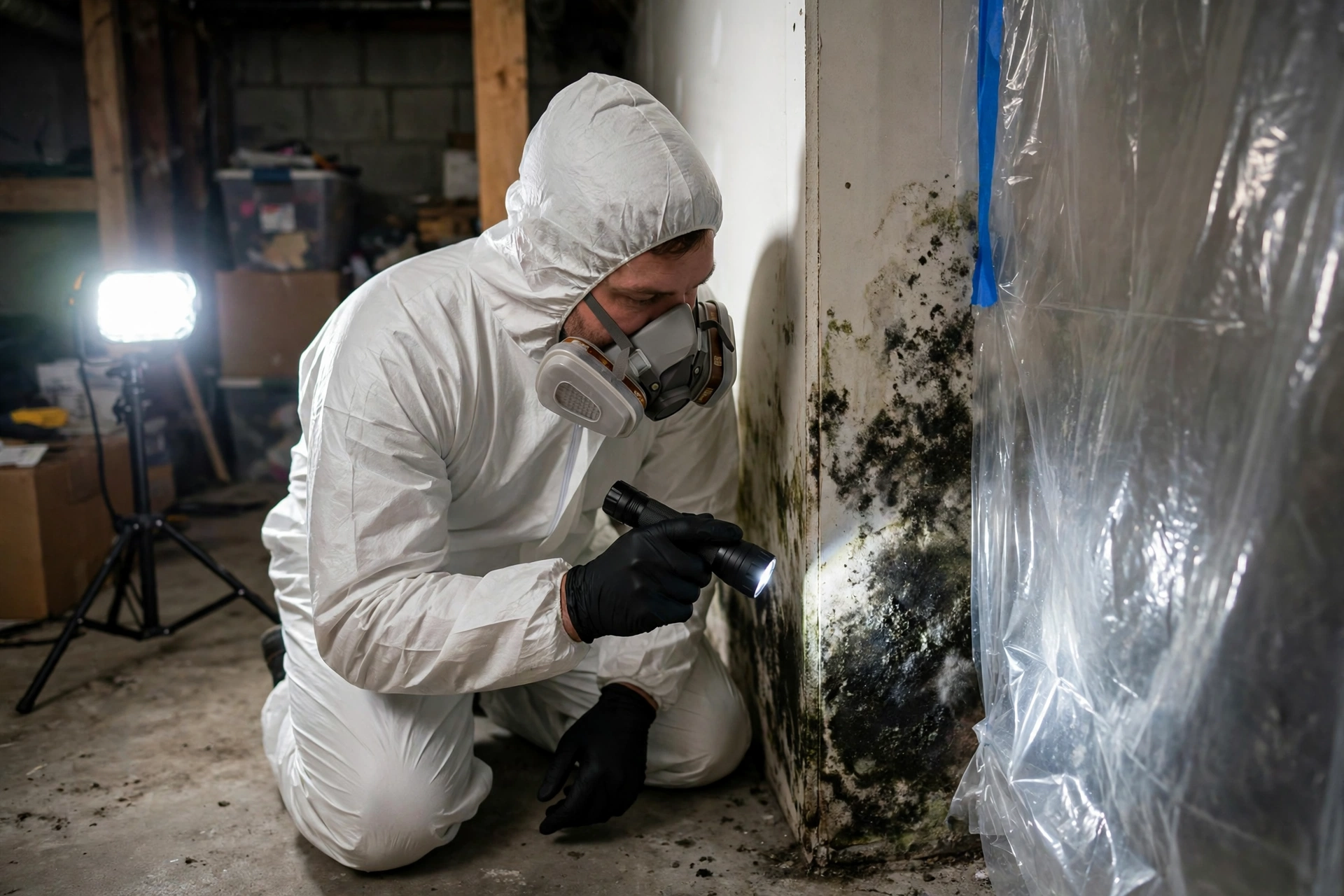
The same way we would want it decided in our own homes: measure the moisture, not just the stain. We run a meter over the wall and the walls beside it, check what the material actually is, find where the water came from and whether it is still coming, and only then talk about square footage. Half the time, the answer genuinely is the small one — a surface patch, a fixed source, an afternoon of your own work with our blessing. The other half, the meter finds the wet outline of the real problem, and it is bigger than the spot that sent you to Google.
One more thing worth knowing before you scrub anything: if you can smell mold strongly but the visible patch is tiny — or you cannot find a patch at all — the size rule has nothing to measure. That is a different puzzle, and we walk through it in our guide to a musty smell with no mold in sight. Smell without growth usually means the growth is somewhere you cannot see, and hunting it is a method, not a demolition.
And a word on credentials, because the DIY-versus-pro decision often comes down to who you trust: Colorado does not license mold remediators, and CDPHE does not regulate mold — so no company, us included, can wave a state mold license at you, and anyone advertising an EPA certification for mold work is advertising something that does not exist. Judge us the way this guide asks you to judge the patch: on what can be measured. A written scope, a moisture source fixed, and third-party lab clearance at the end. If your patch turns out to be a true 10-square-foot surface job, we will tell you that too — at (720) 794-0650, the advice is free either way.