05 The Method
How Do We Find Mold We Cannot See — Without Demolition?
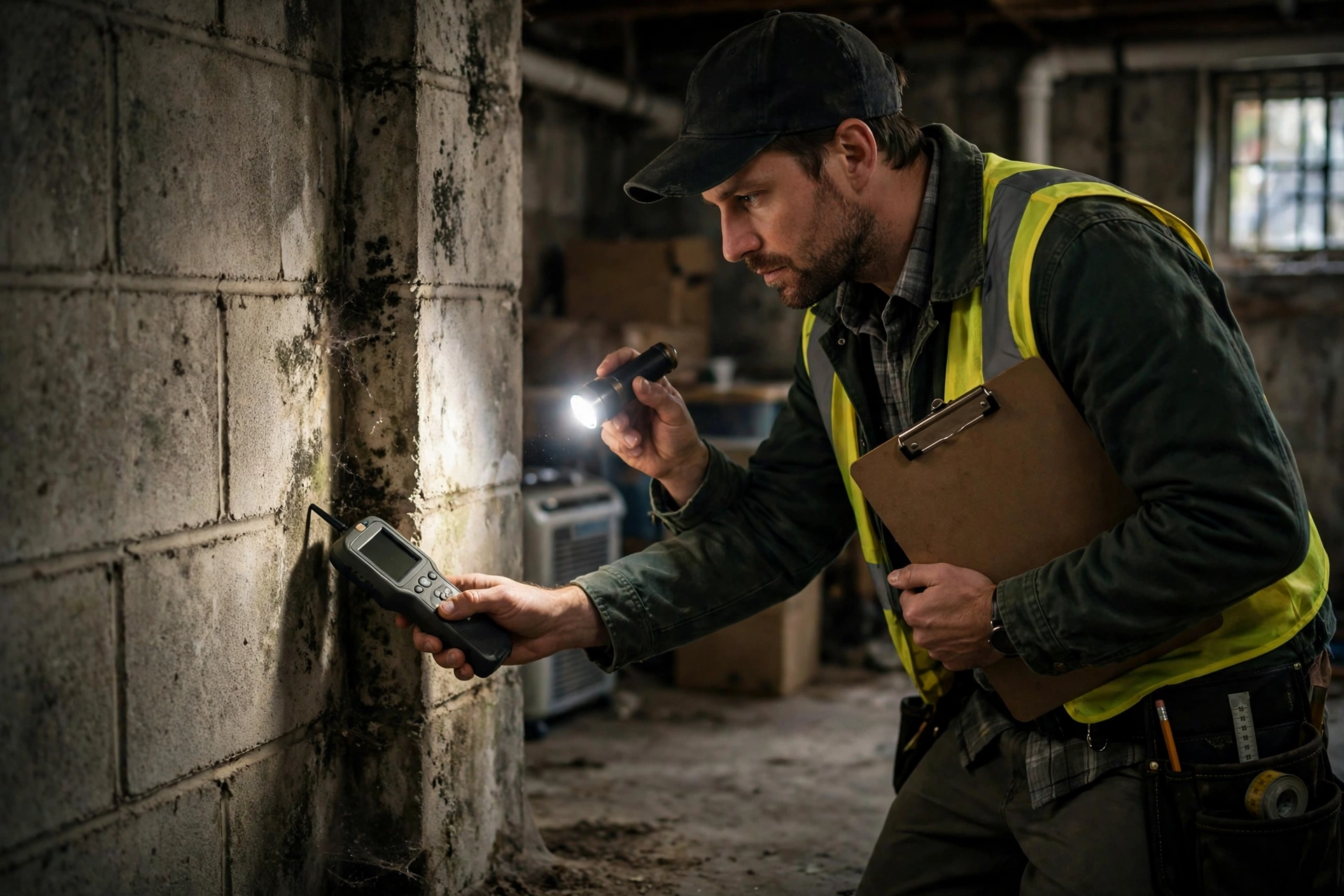
In order: smell first, meter second, opening last. We start by walking the house the way you experience it — where is the smell strongest, when did it start, what changed before it started, does it follow the furnace cycle or the weather? Then the moisture meter comes out, and we map the likely walls, floors, and cavities against the dry parts of the house. Wet material is the fingerprint; mold almost never grows where the meter reads dry. Only when the smell pattern and the moisture map agree on a spot do we talk about opening anything — and then it is a small, targeted check in the place the evidence chose, not exploratory demolition. That is the working method behind a moisture-first inspection of your home, and most hidden sources surrender to it without a single wall coming down.
One caution before you go hunting with a saw of your own: size up anything you do find before you disturb it. A colony you uncover inside a wall can be far bigger than the smell suggested, and there is a well-known threshold for deciding what is a fair DIY cleanup and what is not — we break it down in our guide to the EPA's 10-square-foot rule. Opening a wall blind and dry-scraping what you find is how a one-room problem becomes a whole-house smell.
If the smell has been winning for a while, let us come and lose gracefully on your behalf. The inspection is a look, a set of meter readings, and written findings you can hold any contractor to — call (720) 794-0650 and tell us where the smell is strongest. That one detail, the one you have been living with, is exactly where the hunt starts.