— Arvada, Colorado · From the Blog
Burst Pipe to Mold: The 24–48 Hour Timeline in Arvada
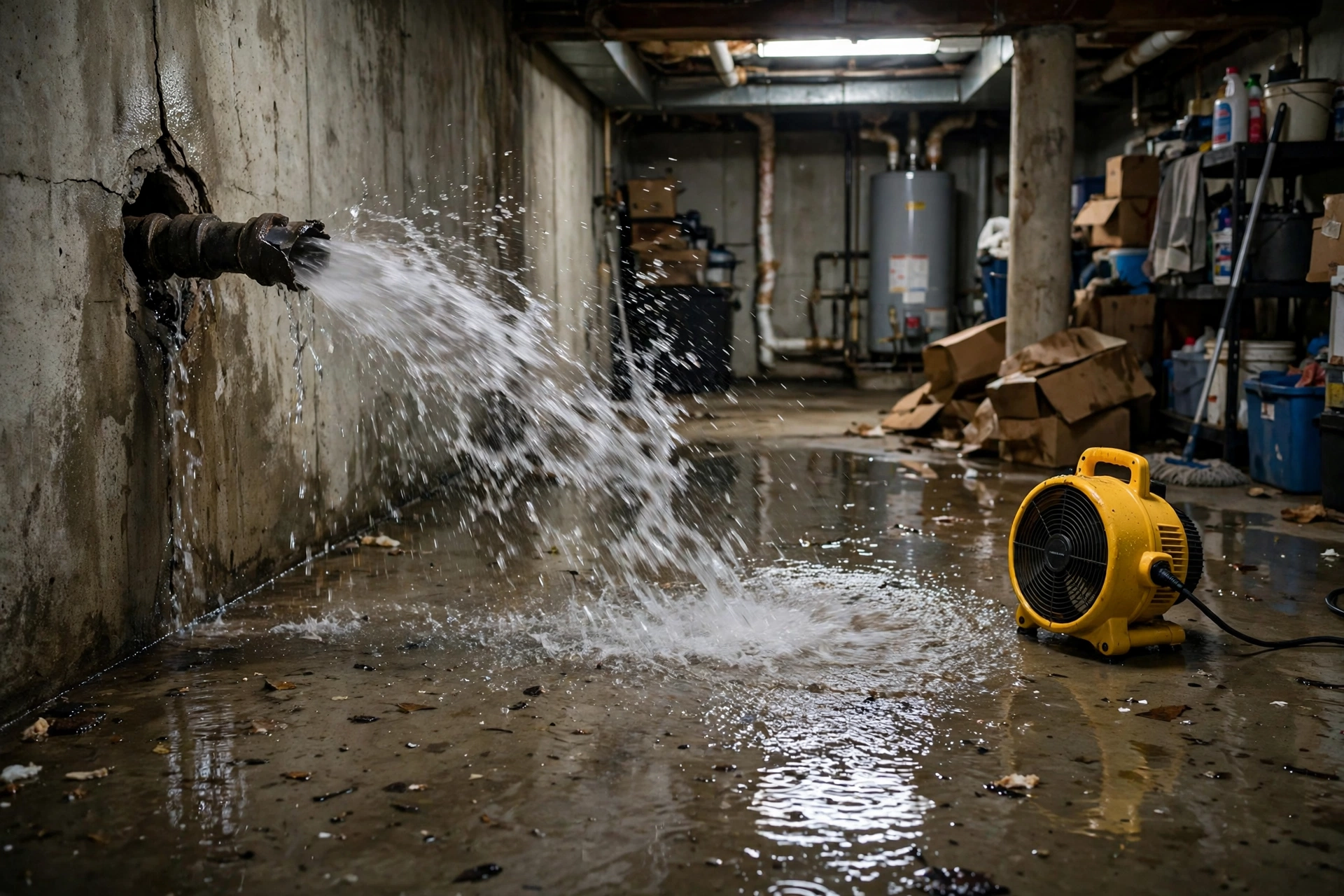
It happens on the coldest mornings of the Arvada year: a chinook swings the temperature, a frozen line lets go, and by the time anyone finds the water, a second clock is already running. This is that clock — hour by hour — and what each hour asks of you.
Reading this with water on the floor? Start with the first-hours list below, then call (720) 794-0650 and we will walk through it with you.
- ANSI/IICRC S520 Process
- Third-Party Lab Results
- Written Scope Before Work Starts
- Free, No-Obligation Quotes
- Local Arvada Team
01 Why It Happens Here
Why Do Arvada Pipes Burst in the Middle of Winter?
Front Range winter is not a steady cold — it is a swing. A chinook wind comes down off the foothills and the temperature can jump in hours; then the mercury drops back below freezing overnight. Water sitting in a line through that freeze–thaw–freeze pattern expands as it turns to ice, and the pipe wall takes the pressure until it splits. The cruel part is the timing: the split often happens during the freeze, but the flood starts at the thaw, when water moves through the break again — sometimes while nobody is home to hear it.
Arvada's housing stock makes us regulars at this. The median Arvada home was built in 1979, and the plumbing in older, less-insulated basements and crawl spaces is the most exposed to those swings. When a line lets go in a Lake Arbor split-level or an Olde Town original, it can run for hours into wall cavities and across subfloors before anyone sees a drop.
And that is where the second clock starts. The mold clock does not start when you discover the water — it starts when the material got wet. Everything below is counted from the wetting, because that is how the growth counts it.
02 The First Hours
What Should You Do in the First Hours After a Pipe Bursts?
Before any crew arrives — ours or anyone's — the first hours belong to you, and they matter more than any drive time. Here is the order we give every caller:
1. Shut off the water. If you can do it safely, close the main — usually in the basement or crawl space near the front wall — or the valve at the fixture. If water is anywhere near outlets, the panel, or plugged-in appliances, skip this step and say so when you call. Electricity changes the order.
2. Document everything before you touch it. Photos and video of every wet room, wall, and belonging, before you move, mop, or tear out anything. Insurers pay sudden water events far more readily with documentation than with a dried-out room and a story.
3. Get the standing water out. Mop, wet-vac, towels at the base of walls — whatever you have. Every gallon you pull out in hour one is a gallon that is not wicking into drywall and subfloor in hour ten.
4. Keep everyone out of the wet area. Close the door and keep kids and pets out until it is assessed. Wet drywall and carpet can already be growing things you do not want tracked through the rest of the house.
5. Do not aim household fans at wet walls. It feels productive, but air blown across wet, growing drywall mostly spreads spores into clean rooms. Real drying is contained drying — that is our side of the job.
6. Call. Our emergency mold service is built for exactly this window: we talk you through anything above you are unsure about, then come out, contain the area, and start drying — with the scope written down before removal work begins.
03 The Clock
How Does the 24–48 Hour Clock Actually Run?
The window is not a sales line — it is the guidance the EPA gives homeowners: materials dried within 24 to 48 hours of a water event usually will not grow mold. Past that window, wet material can begin to colonize. Here is how the days divide up:
In the first day, the job is extraction and drying: material that gives up its water inside the window usually stays clean, and the story ends as a plumbing repair. Between 24 and 48 hours, growth can begin inside wet drywall and insulation — often before anything shows on the surface. From day three onward, colonies establish in the cavities, and the scope stops being about drying and starts being about removal. Weeks later, it is a different job entirely, and a bigger one.
04 The Dryness Trap
Why Does a Room That Feels Dry Still Grow Mold?
Because a surface can feel dry while the structure behind it is still wet. That single distinction decides most burst-pipe outcomes, and it is the one nobody can check with a hand.
Drywall wicks water upward behind the paint, so the wettest part of the wall is the part you cannot see. Insulation holds moisture against the studs like a sponge. Carpet and pad dry on top while the subfloor underneath stays damp, and laminate traps water against that same subfloor. Sill plates — the wood sitting on the foundation — can stay wet long after the room feels normal. Fans and open windows dry what you can touch. They do very little for what you cannot.
That is why every job we scope starts with a moisture meter and a probe, not a guess. The meter finds the wet the eye cannot. If the readings come back low, we tell you that too — and there is no job to sell you. Drying you can verify beats drying you can feel, every time.
05 The Paperwork
What Does Insurance Usually Cover After a Burst Pipe?
The framing most Arvada homeowners run into is this: a sudden burst pipe is the kind of event insurers most often cover — it is abrupt, accidental, and documentable. Mold blamed on a slow, long-running leak is the kind they most often deny, because the policy expects the leak to have been caught and fixed. The same growth, two very different conversations, decided mostly by which story the evidence tells.
Two more realities worth knowing before you need them. Mold coverage is commonly capped, typically between $1,000 and $10,000, even when the water event itself is covered. And a sump pump failure usually needs a separate water-backup endorsement on the policy to count at all — a failed pump during melt week is its own situation, and we walk through it in our guide to what happens when a sump pump quits.
What protects you is a timeline. Photograph the water and the growth with dates on them, keep the plumber's invoice from the original repair, and do not tear anything out before it is documented. If your water claim already closed before mold appeared, call your adjuster back with that paper in hand — a dated photo set and a written inspection report are what reopen the conversation.
06 After the Emergency
What Happens in the Days and Weeks After — If the Drying Fell Short?
The pipe is fixed, the rental fans went back, and life moves on. Then, one to three weeks later, a smell arrives in the basement that was not there before. Or a stain blooms on the ceiling below the bathroom. Or the baseboards start to swell and the paint above them bubbles. That sequence is so common it is practically a schedule: the visible water got handled, the structure never dried, and the growth announces itself once it is established enough to smell.
That later stage — after the emergency, before the damage spreads further — is what our mold-after-water-damage work covers. We meter the walls and floors, find where the moisture pathway ran, scope what has to open up in writing, and remove the growth with lab proof at the end. Hidden growth does not stay the size you found it, so the cheapest week to deal with it is the first one you notice it.
And if you are reading this before any of it has happened — during a hard freeze, say, with a house that has burst before — the whole timeline above is the argument for acting in hours, not days. The clock is not there to scare anyone. It is there because the difference between a drying bill and a demolition bill is usually about two days.
07 Get Started
Request Inspection Online
Tell us what you are seeing — the smell, the stain, the flooded corner. We will call back with next steps.
Prefer to talk? Call (720) 794-0650.
08 FAQ
Questions, Answered Straight
The three questions every Arvada homeowner asks us after a pipe lets go — answered with the reasoning attached.
Within 24 to 48 hours of the wetting. Growth can begin inside wet drywall and insulation in that window, often before anything shows on the surface. It is also the EPA's guidance to homeowners: materials dried within 24–48 hours usually will not grow mold. Remember the clock runs from when the material got wet — not from when you found the water.
Not necessarily — and that gap is where most post-flood mold comes from. Surfaces dry first; wall cavities, insulation, subfloors, and sill plates can hold moisture for weeks behind a dry-feeling room. The only honest answer comes from a moisture meter and a probe, which is where every job we scope begins.
A burst pipe is a sudden event — the kind insurers most often cover — while mold from a slow, long-running leak is the kind they most often deny. Mold coverage itself is commonly capped, typically between $1,000 and $10,000. What decides your claim is documentation: dated photos, the plumber's invoice, and a written report before anything is torn out.
Ready to Deal With Your Mold Problem?
The smell, the stain, the flooded corner — whatever brought you here, the next step is a look, a moisture reading, and a written scope you can hold us to.
Free, no-obligation quotes · Written scope before work starts · Third-party lab clearance